 Blog
Blog
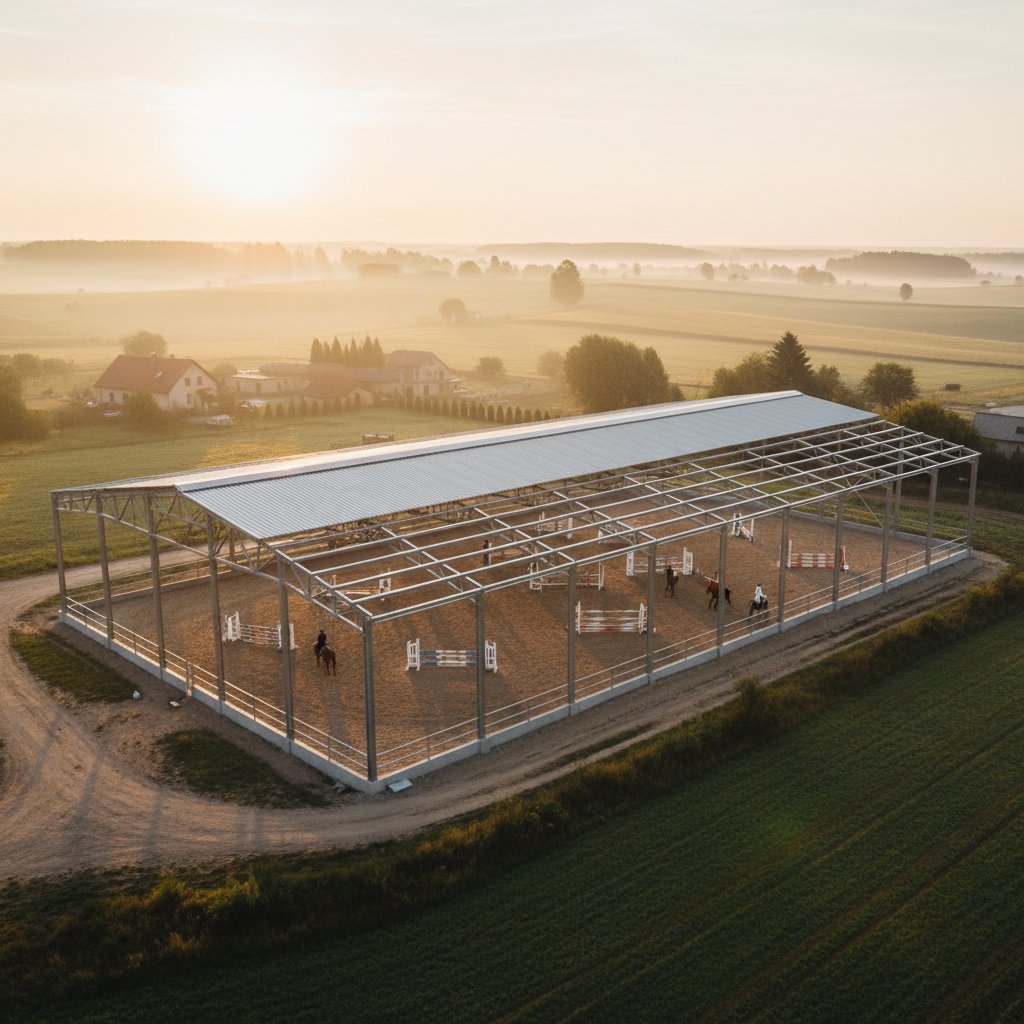
Meet Piotr. He runs a diversified farm in Greater Poland, navigating the complexities of modern agriculture for over two decades. For years, Piotr battled the unpredictable European climate - seven months of driving rain, heavy snow, and strong winds meant his valuable machinery rusted prematurely, harvested grain suffered from moisture damage, and livestock faced unnecessary stress. Worse still, without proper storage, he was losing significant value from his produce and constantly repairing equipment.
A few years ago, Piotr decided it was time for a serious upgrade. Traditional brick or timber buildings were absurdly expensive and often involved lengthy bureaucratic processes. A cheap, imported tent of unknown origin felt far too risky when protecting investments worth tens of thousands of euros. His final choice was a custom-engineered standard width agricultural hangar (a universal width for agriculture), designed and manufactured by Swed-Trac.
Today, in twenty twenty-six, his farm's efficiency and profitability have surged. Grain is stored safely, machinery is protected year-round, and his cattle are more comfortable, regardless of whether November storms are battering the Polish countryside or January frost has frozen the ground solid. Most crucially, his hangar has already paid off more than half its initial cost. These are exactly the kind of ROI figures pushing more European farms, from small family holdings to large agribusinesses, to invest in a robust steel building.
In this piece, the Swed-Trac team strips away the marketing gloss to dismantle the entire agricultural hangar building process. No empty promises. Just hard numbers, real European client cases, a forensic ROI analysis, and blunt advice from the factory floor. Whether you run a small organic farm in Lithuania or an expanding arable operation in Germany, you will find everything you need to know before making this strategic move towards a wide-span universal hangar.
Key Facts and Specifications: The Universal agricultural hangar
Before we talk money and returns, we need absolute clarity on the structure itself. Here's the thing: a standard-width wide and typically 20-60 metre long hangar is not just a massive roof. It is a highly stressed engineering project that must withstand brutal wind and snow loads while providing optimal conditions for grain, machinery, or livestock.
The hangar is our most recommended and versatile width, offering an ideal balance between cost-efficiency and functional space. It provides ample room for large tractors, combines, and other agricultural machinery, allows for efficient grain storage layouts, and can comfortably house various livestock operations. While we offer other widths, the hangar stands out as the optimal choice for most European farmers.
| Specification | Details (Recommended: hangar) | Alternative Widths Available |
|---|---|---|
| Universal Width | 12 meters (optimal for most farms) | 8m, 10m, 15m, 18m, 20m |
| Typical Lengths | From 20 m to 60 m (customisable) | Customisable |
| Total Area (e.g. 12x30m) | 360 sq. m. | Varies by width and length |
| Wall Height | From 4.5 m to 6.5 m (optional) | Varies |
| Ridge Height | Approx. 7-10 m (depending on roof pitch) | Varies |
| Structure | Steel (CE EN 1090-2 standard) | Same |
| Covering (Tent) | Heavy-duty, UV-resistant PVC (900 g/m²) | Same |
| Covering (Panels) | Sandwich panels with PIR core (80-120 mm) | Same |
| Warranty | Twenty-five years on the steel frame | Same |
| Manufacturing Site | Šilutė, Lithuania (Swed-Trac factory) | Same |
Full Price Breakdown: What Does a hangar Actually Cost?
Price is the first question every client asks the moment they call our European sales office. The internet is flooded with adverts promising "halls for pennies." But when you are erecting a robust steel building that will protect valuable assets and potentially house livestock, cutting corners on structural integrity is a fool's game.
Below are three realistic pricing scenarios for a hangar (e.g., 12x30m, offering 360 sq. m.) for the European market in twenty twenty-six. Keep in mind these figures are preliminary and fluctuate based on global steel indices and the specific wind/snow load requirements of your region. The hangar typically offers the best cost-to-space ratio.
| Scenario | Description | Estimated Price (EUR ex. VAT) | Price per sq. m. (for 12x30m) |
|---|---|---|---|
| Base Tent (PVC) | Steel frame, high-grade single-layer PVC tent for walls and roof. Superb protection against rain and wind. Uninsulated. | 38,000 - 48,000 € | ~105 - 133 € |
| Medium (Combined) | Steel frame, sandwich panels for walls (impact protection, basic insulation), and a double-layer roof tent with an anti-condensation system. | 55,000 - 70,000 € | ~153 - 194 € |
| Premium (Fully Insulated) | Fully insulated standard width agricultural hangar using PIR sandwich panels (walls and roof). Ideal for temperature-sensitive crops, livestock, or workshops. | 85,000 - 110,000 € | ~236 - 305 € |
Note: These figures cover the structure and professional assembly. However, this is far from the total capital you will need to complete the project.
What Is Included in the Quote, and What Is Your Responsibility
One of the most common mistakes novice farm owners make is budgeting solely for the building, entirely forgetting about the necessary groundwork or internal fit-out. In the spirit of total transparency, we break down exactly what we deliver and what you (or your local contractors) need to handle for your hangar.
| Included in the Swed-Trac Quote | Client Responsibility (Not Included) |
|---|---|
| Structural engineering design | Architectural planning and building permits |
| Steel frame manufacturing (in Šilutė) | Site leveling and groundworks |
| Wall and roof coverings (tent/panels) | Foundation casting (concrete work) |
| Standard gates and doors (e.g., sliding or roller doors) | Internal concrete floor or drainage |
| Delivery to the site anywhere in Europe | Interior lighting systems and electrical wiring |
| Full professional assembly | Ventilation systems (beyond standard ridge vents) |
| Technical passport and CE certificates | Internal fit-out (e.g., grain walls, livestock pens, shelving) |
Return on Investment (ROI) and Financing: How a hangar Generates Cash
This is where the conversation gets serious. Let's look at the actual standard width agricultural hangar cases and ROI. A hangar is not a luxury asset. It is a production tool. Let us calculate how it pays for itself using a typical mixed farm in the Netherlands as our baseline.
Revenue Increases & Cost Savings
- Reduced Crop Spoilage: A standard width grain storage hangar can significantly reduce losses from moisture, pests, and weather. For a farm storing 500 tonnes of grain, preventing just a 5% spoilage can save 5,000 EUR annually (at 200 EUR/tonne).
- Machinery Protection: Housing expensive machinery in a standard width machinery shed extends its lifespan by years, reducing depreciation and maintenance costs. A combine harvester worth 200,000 EUR might see its lifespan extended by 10-15%, saving thousands in replacement costs and repairs annually.
- Increased Productivity: All-weather access means fieldwork can be planned more efficiently, and repairs can happen regardless of the elements. This translates to fewer delays and better yields.
- Livestock Health & Comfort: For dairy or beef operations, a well-ventilated steel building provides a stable environment, reducing animal stress and improving health, which can lead to higher milk yields or faster weight gain.
- Bulk Purchasing & Storage: The ability to store feed, fertiliser, or other inputs in bulk within your hangar allows for advantageous purchasing, saving up to 10-15% on input costs.
ROI Calculation: Let us say you opt for a Medium combined hangar (12x40m, 480 sq. m.) at 65,000 EUR. Add roughly 15,000 EUR for foundations and a basic concrete floor. Total capital expenditure: 80,000 EUR. If you generate an additional 15,000 EUR in annual savings/revenue (e.g., 5,000 EUR from grain, 5,000 EUR from machinery, 5,000 EUR from bulk purchases), your hangar completely pays for itself in just over five years. This is a phenomenal yield for a long-term farm asset.
EU Funding and Bank Financing
In twenty twenty-six, the European Union's Common Agricultural Policy (CAP) and EAFRD (European Agricultural Fund for Rural Development) continue to heavily subsidize rural development and farm modernization. Farmers across the EU, from Sweden to Spain, can secure grants covering up to fifty percent of eligible costs for essential infrastructure like a standard width agricultural hangar. This effectively halves your ROI timeframe and significantly reduces initial outlay. Major European lenders like Rabobank, BNP Paribas, and Nordea are also highly receptive to financing steel structures that carry full CE EN 1090-2 certification.
Competitor Comparison: Swed-Trac vs the European Market
We are not the only players in Europe. A quick search will bring up names like Frisomat in Belgium, Borga in Sweden, or Astron Buildings in Luxembourg. How do you choose? We never shy away from a direct comparison because we know exactly where our engineering excels, especially for a hangar.
| Criteria | Swed-Trac | Frisomat (BE) | Borga (SE) | Astron (LU) |
|---|---|---|---|---|
| Manufacturing Site | Lithuania (Šilutė) | Belgium | Sweden / Poland | Luxembourg / Europe |
| Core Specialty | Heavy-duty steel, agriculture, industrial | Cold-formed steel, industrial | Agricultural, industrial | Large-span industrial |
| Price Bracket | Medium - High | Medium | Medium - High | High |
| Service Approach | Direct factory relationship, tailored | Standardised, volume-driven | Project-based, regional | Engineering-focused, large-scale |
Our distinct advantage in the agricultural sector comes down to understanding the harsh realities of a farm environment. Moisture from grain, exhaust fumes from machinery, and animal waste create a highly corrosive atmosphere. A painted frame will begin to blister and rust within a few short years in an agricultural setting. Not worth the hassle when investing in a steel building.
The Process: From First Inquiry to Handing Over the Keys
What does working with us actually look like? Here are the ten steps we will navigate together for your hangar project:
- Inquiry and Needs Analysis (1 week): You ring us, we dissect your vision, assess your local climate loads, and define the budget for your hangar.
- Preliminary Quote (2-3 days): We issue a highly detailed commercial proposal.
- Contract and Deposit: We lock in the price and the timeline. Our contracts are ruthlessly transparent-no hidden fees.
- Engineering Design (3-4 weeks): Our structural engineers draft the blueprints, specifically calculating the wind and snow loads for your exact postcode.
- Permitting (Client responsibility, 1-3 months): Your local architect uses our technical drawings to satisfy the local planning authority.
- Manufacturing in Šilutė (4-6 weeks): We cut and weld the steel, weld the PVC membranes, or cut the sandwich panels.
- Groundworks (Client responsibility): While we build the frame, your local contractors pour the concrete footings according to our specs.
- Site Delivery (1 day): The articulated lorries arrive at your farm with the complete kit.
- Assembly (2-4 weeks): Our specialist rigging crew erects your standard width agricultural hangar.
- Handover and Champagne: We hand over the keys, the CE certificates, and shake hands.
Technical Requirements and Standards for Agricultural Buildings
Erecting a building for agriculture is not just about keeping the rain off. It must comply with strict legal frameworks and best practices to ensure longevity and safety. Your national agricultural authorities-whether that is the Landwirtschaftskammer in Germany, the ARiMR in Poland, or the RVO in the Netherlands-will have regulations regarding farm structures.
EU Construction Products Regulation (CPR) No 305/2011: This regulation ensures that construction products, including steel structures, meet essential requirements for safety, health, and environmental protection. Our steel building complies fully.
CE EN 1090-2 Standard: Every piece of steel leaving the Swed-Trac factory carries this certification. It is your legal guarantee that the welds have been X-rayed and the steel grade will survive the harshest European winters without buckling. Insurers like Allianz, AXA, and Länsförsäkringar demand this certificate before underwriting the building.
Ventilation and Environmental Control: For grain storage, proper ventilation prevents moisture buildup and spoilage. For livestock, adequate airflow is crucial for animal health and comfort. Our hangars are designed with options for oversized ridge vents and eave openings to ensure optimal air exchange, preventing condensation and managing internal temperatures. This is particularly important for a standard width grain storage hangar or livestock housing.
Three Real European Client Cases and Their ROI for a hangar
Theory is fine, but cold, hard cash talks louder. Here are three distinct standard width agricultural hangar cases and ROI profiles from our recent European portfolio.
Case 1: Hof Müller (Lower Saxony, Germany)
The Problem: Thomas Müller, a grain farmer, was losing up to 8% of his annual harvest to rodent damage and moisture in his old, poorly sealed shed. His combine harvester also sat outside, exposed to the elements. The Solution: He opted for our Base tent standard width grain storage hangar (12x40 m) with a concrete floor and robust front-end loader access. The Investment: Roughly 45,000 EUR for the structure plus 12,000 EUR for groundworks and concrete. The Result: His grain losses were cut to less than 1%, saving him approximately 6,000 EUR annually. His combine, now protected in the standard width machinery shed, showed significantly less wear and tear, extending its useful life by an estimated three years, saving on depreciation. ROI: The entire project paid for itself in less than five years. Today, the hangar is pure profit, securing his harvest and protecting his assets.
Case 2: Agro-Farm Sp. z o.o. (Lublin Voivodeship, Poland)
The Problem: A medium-sized dairy farm needed to expand its cattle housing but faced prohibitive costs for traditional barns. They also needed space for feed storage. The Solution: They secured EAFRD rural development funding and chose the Medium combined hangar (12x50 m)-sandwich panels on the lower walls for insulation and impact protection, and a tented roof for natural light and anti-condensation. The Investment: Total project cost was 70,000 EUR. The EU grant covered fifty percent (35,000 EUR). The Result: The farm successfully increased its herd size by 30 cows. Improved housing conditions led to a 5% increase in milk yield per cow and reduced veterinary costs. The new feed storage also allowed for bulk purchasing. The out-of-pocket investment was recouped in under four years.
Case 3: Oakhaven Farm (County Cork, Ireland)
The Problem: A mixed farm with a growing fleet of modern, large machinery needed a dedicated, secure, and dry space for maintenance and storage. Their existing sheds were too small and damp. The Solution: A Premium, fully insulated standard width machinery shed (12x35m) built entirely from PIR sandwich panels, featuring large roller doors and enhanced lighting for workshop activities. The Investment: Approximately 95,000 EUR. The Result: The farm consolidated all machinery under one roof, significantly reducing corrosion and breakdowns. On-site maintenance became more efficient, saving on external workshop costs. The secure, insulated space also allowed for storage of sensitive electronics and tools. The farm calculated a projected ROI at a solid six years, primarily through extended machinery lifespan and reduced operational costs.
Decision Tree: Which hangar Type Should You Choose?
Struggling to decide which specification fits your farm? Use this blunt decision tree straight from our engineering team, focusing on the highly recommended hangar:
-
What is your budget? * Under 50,000 EUR: Stick to the Base tent hangar. It is cost-effective and offers brilliant protection from the elements. * Over 60,000 EUR: You are in the territory for a Medium combined or Premium insulated steel building.
-
What will you primarily store or house? * Machinery, hay, general dry storage: The standard tent or Medium combined standard width machinery shed is more than enough. * Grain, temperature-sensitive crops, or livestock (especially in colder climates): You absolutely need the Premium sandwich panels for insulation and climate control for your standard width grain storage hangar or livestock building. * A versatile space for multiple uses (e.g., machinery, occasional feed, workshop): The Medium combined wide-span universal hangar often offers the best balance.
-
Do you need to maintain a stable internal temperature or prevent condensation? * Yes (e.g., for grain, livestock, or a heated workshop): The Premium insulated standard width agricultural hangar is essential. * No (e.g., for cold storage of machinery): The tent or combined option is perfect.
Master’s Tips and Common Mistakes to Avoid for Your hangar
We have seen it all over the years. Here is a list of non-negotiables if you want to avoid a very expensive headache down the line with your hangar:
- Ventilation is king. Stored grain, hay, or livestock generate moisture. If your hangar lacks aggressive airflow, that moisture hits the cold roof, condenses, and can lead to spoilage or unhealthy conditions. We engineer specific ridge vents to prevent this.
- Do not skimp on the foundation. A steel building is a substantial structure. Proper concrete footings are critical to ensure stability and longevity, especially when housing heavy machinery or large quantities of grain.
- Consider internal walls/bays. If you plan to store grain, integrate robust push walls into your design. For livestock, plan for appropriate internal divisions and feeding systems.
- Respect the snow. European winters can dump heavy snow overnight. Our steel frames are engineered to carry up to one hundred and fifty kilograms of snow per square metre, meaning you will not be up at 3 AM with a broom trying to save your roof.
- Plan for access. Ensure your chosen door types and sizes (e.g., large roller doors) are adequate for your largest machinery to enter and exit your standard width machinery shed with ease.
Want a quote on a hangar? Call +370 645 18595 or email sales@swedhall.se - we will prepare an individual quote within 24 hours.
Frequently Asked Questions (FAQ)
Exactly how much does a agricultural hangar cost?
The base price for a heavy-duty tented hangar (e.g., 12x30m) starts at around thirty-eight thousand euros. However, the final figure will depend heavily on your chosen wall cladding, the number of industrial doors, the length, and the specific wind and snow load engineering required for your local European postcode.
Why is the standard width width recommended by Swed-Trac?
The hangar offers the most universal and cost-effective solution for a majority of European farms. It provides ample space for modern agricultural machinery, allows for efficient grain storage layouts, and can comfortably house various livestock operations, all while maintaining excellent structural integrity and a competitive price point. It's truly a wide-span universal hangar .
Can I get EU funding for a standard width agricultural hangar?
Yes, many European Union member states offer grants and subsidies through the Common Agricultural Policy (CAP) and the European Agricultural Fund for Rural Development (EAFRD) for farm modernization and infrastructure projects, including standard width steel buildings . We recommend contacting your national or regional agricultural agency for specific eligibility criteria and application processes.
What are the main benefits of a standard width grain storage hangar?
A standard width grain storage hangar provides superior protection from moisture, pests, and extreme weather, significantly reducing post-harvest losses. It allows for bulk storage, enabling farmers to sell at optimal market prices rather than being forced to sell immediately after harvest. The improved conditions also help maintain grain quality.
How long does it take to assemble a standard width machinery shed?
Once the foundations are prepared, our specialist rigging crew can typically erect a standard standard width machinery shed in approximately 2-4 weeks, depending on the length and complexity of the chosen specifications.--- title: "agricultural hangar: Real European Farm Cases, ROI, and Full Analysis" metaTitle: "agricultural hangar: Cases and ROI | Swed-Trac" metaDescription: "Considering a new agricultural hangar? Detailed hangar case studies across Europe, 2026 pricing, ROI calculations, and
agricultural hangar: Real European Farm Cases, Return on Investment (ROI), and Full Analysis
Meet Piotr. He runs a diversified farm in Greater Poland, navigating the complexities of modern agriculture for over two decades. For years, Piotr battled the unpredictable European climate - seven months of driving rain, heavy snow, and strong winds meant his valuable machinery rusted prematurely, harvested grain suffered from moisture damage, and livestock faced unnecessary stress. Worse still, without proper storage, he was losing significant value from his produce and constantly repairing equipment.
A few years ago, Piotr decided it was time for a serious upgrade. Traditional brick or timber buildings were absurdly expensive and often involved lengthy bureaucratic processes. A cheap, imported tent of unknown origin felt far too risky when protecting investments worth tens of thousands of euros. His final choice was a custom-engineered standard width agricultural hangar (a universal width for agriculture), designed and manufactured by Swed-Trac.
Today, in twenty twenty-six, his farm's efficiency and profitability have surged. Grain is stored safely, machinery is protected year-round, and his cattle are more comfortable, regardless of whether November storms are battering the Polish countryside or January frost has frozen the ground solid. Most crucially, his hangar has already paid off more than half its initial cost. These are exactly the kind of ROI figures pushing more European farms, from small family holdings to large agribusinesses, to invest in a robust steel building.
In this piece, the Swed-Trac team strips away the marketing gloss to dismantle the entire agricultural hangar building process. No empty promises. Just hard numbers, real European client cases, a forensic ROI analysis, and blunt advice from the factory floor. Whether you run a small organic farm in Lithuania or an expanding arable operation in Germany, you will find everything you need to know before making this strategic move towards a wide-span universal hangar.
Key Facts and Specifications: The Universal agricultural hangar
Before we talk money and returns, we need absolute clarity on the structure itself. Here's the thing: a standard-width wide and typically 20-60 metre long hangar is not just a massive roof. It is a highly stressed engineering project that must withstand brutal wind and snow loads while providing optimal conditions for grain, machinery, or livestock.
The hangar is our most recommended and versatile width, offering an ideal balance between cost-efficiency and functional space. It provides ample room for large tractors, combines, and other agricultural machinery, allows for efficient grain storage layouts, and can comfortably house various livestock operations. While we offer other widths, the hangar stands out as the optimal choice for most European farmers.
| Specification | Details (Recommended: hangar) | Alternative Widths Available |
|---|---|---|
| Universal Width | 12 meters (optimal for most farms) | 8m (small farms), 10m (medium farms), 15m (wider), 18m (large farms), 20m (industrial) |
| Typical Lengths | From 20 m to 60 m (customisable) | Customisable |
| Total Area (e.g. 12x30m) | 360 sq. m. | Varies by width and length |
| Wall Height | From 4.5 m to 6.5 m (optional) | Varies |
| Ridge Height | Approx. 7-10 m (depending on roof pitch) | Varies |
| Structure | Steel (CE EN 1090-2 standard) | Same |
| Covering (Tent) | Heavy-duty, UV-resistant PVC (900 g/m²) | Same |
| Covering (Panels) | Sandwich panels with PIR core (80-120 mm) | Same |
| Warranty | Twenty-five years on the steel frame | Same |
| Manufacturing Site | Šilutė, Lithuania (Swed-Trac factory) | Same |
Full Price Breakdown: What Does a hangar Actually Cost?
Price is the first question every client asks the moment they call our European sales office. The internet is flooded with adverts promising "halls for pennies." But when you are erecting a robust steel building that will protect valuable assets and potentially house livestock, cutting corners on structural integrity is a fool's game.
Below are three realistic pricing scenarios for a hangar (e.g., 12x30m, offering 360 sq. m.) for the European market in twenty twenty-six. Keep in mind these figures are preliminary and fluctuate based on global steel indices and the specific wind/snow load requirements of your region. The hangar typically offers the best cost-to-space ratio, with prices for prefabricated steel buildings often ranging from €100 to €1000 per m², though a more common range for steel frame buildings with cladding is £250-£350 per m² (approximately €290-€400 per m²) excluding groundwork.
| Scenario | Description | Estimated Price (EUR ex. VAT) | Price per sq. m. (for 12x30m) |
|---|---|---|---|
| Base Tent (PVC) | Steel frame, high-grade single-layer PVC tent for walls and roof. Superb protection against rain and wind. Uninsulated. | 38,000 - 48,000 € | ~105 - 133 € |
| Medium (Combined) | Steel frame, sandwich panels for walls (impact protection, basic insulation), and a double-layer roof tent with an anti-condensation system. | 55,000 - 70,000 € | ~153 - 194 € |
| Premium (Fully Insulated) | Fully insulated standard width agricultural hangar using PIR sandwich panels (walls and roof). Ideal for temperature-sensitive crops, livestock, or workshops. | 85,000 - 110,000 € | ~236 - 305 € |
Note: These figures cover the structure and professional assembly. However, this is far from the total capital you will need to complete the project.
What Is Included in the Quote, and What Is Your Responsibility
One of the most common mistakes novice farm owners make is budgeting solely for the building, entirely forgetting about the necessary groundwork or internal fit-out. In the spirit of total transparency, we break down exactly what we deliver and what you (or your local contractors) need to handle for your hangar.
| Included in the Swed-Trac Quote | Client Responsibility (Not Included) |
|---|---|
| Structural engineering design | Architectural planning and building permits |
| Steel frame manufacturing (in Šilutė) | Site leveling and groundworks |
| Wall and roof coverings (tent/panels) | Foundation casting (concrete work) |
| Standard gates and doors (e.g., sliding or roller doors) | Internal concrete floor or drainage |
| Delivery to the site anywhere in Europe | Interior lighting systems and electrical wiring |
| Full professional assembly | Ventilation systems (beyond standard ridge vents) |
| Technical passport and CE certificates | Internal fit-out (e.g., grain walls, livestock pens, shelving) |
Return on Investment (ROI) and Financing: How a hangar Generates Cash
This is where the conversation gets serious. Let's look at the actual standard width agricultural hangar cases and ROI. A hangar is not a luxury asset. It is a production tool. Let us calculate how it pays for itself using a typical mixed farm in the Netherlands as our baseline.
Revenue Increases & Cost Savings
- Reduced Crop Spoilage: A standard width grain storage hangar can significantly reduce losses from moisture, pests, and weather, which can damage grain if not properly stored. For a farm storing 500 tonnes of grain, preventing just a 5% spoilage can save 5,000 EUR annually (at 200 EUR/tonne). On-farm grain storage can also increase grain value by allowing farmers to defer delivery until prices increase.
- Machinery Protection: Housing expensive machinery in a standard width machinery shed extends its lifespan by years, reducing depreciation and maintenance costs. A combine harvester worth 200,000 EUR might see its lifespan extended by 10-15%, saving thousands in replacement costs and repairs annually.
- Increased Productivity: All-weather access means fieldwork can be planned more efficiently, and repairs can happen regardless of the elements. This translates to fewer delays and better yields.
- Livestock Health & Comfort: For dairy or beef operations, a well-ventilated steel building provides a stable environment, reducing animal stress and improving health, which can lead to higher milk yields or faster weight gain.
- Bulk Purchasing & Storage: The ability to store feed, fertiliser, or other inputs in bulk within your hangar allows for advantageous purchasing, saving up to 10-15% on input costs.
ROI Calculation: Let us say you opt for a Medium combined hangar (12x40m, 480 sq. m.) at 65,000 EUR. Add roughly 15,000 EUR for foundations and a basic concrete floor. Total capital expenditure: 80,000 EUR. If you generate an additional 15,000 EUR in annual savings/revenue (e.g., 5,000 EUR from grain, 5,000 EUR from machinery, 5,000 EUR from bulk purchases), your hangar completely pays for itself in just over five years. This is a phenomenal yield for a long-term farm asset.
EU Funding and Bank Financing
In twenty twenty-six, the European Union's Common Agricultural Policy (CAP) and EAFRD (European Agricultural Fund for Rural Development) continue to heavily subsidize rural development and farm modernization. Farmers across the EU, from Sweden to Spain, can secure grants covering up to fifty percent of eligible costs for essential infrastructure like a standard width agricultural hangar. This effectively halves your ROI timeframe and significantly reduces initial outlay. Major European lenders like Rabobank, BNP Paribas, and Nordea are also highly receptive to financing steel structures that carry full CE EN 1090-2 certification.
Competitor Comparison: Swed-Trac vs the European Market
We are not the only players in Europe. A quick search will bring up names like Frisomat in Belgium, Borga in Sweden, or Astron Buildings in Luxembourg. How do you choose? We never shy away from a direct comparison because we know exactly where our engineering excels, especially for a hangar.
| Criteria | Swed-Trac | Frisomat (BE) | Borga (SE) | Astron (LU) |
|---|---|---|---|---|
| Manufacturing Site | Lithuania (Šilutė) | Belgium | Sweden / Poland | Luxembourg / Europe |
| Core Specialty | Heavy-duty steel, agriculture, industrial | Cold-formed steel, industrial | Agricultural, industrial | Large-span industrial |
| Price Bracket | Medium - High | Medium | Medium - High | High |
| Service Approach | Direct factory relationship, tailored | Standardised, volume-driven | Project-based, regional | Engineering-focused, large-scale |
Our distinct advantage in the agricultural sector comes down to understanding the harsh realities of a farm environment. Moisture from grain, exhaust fumes from machinery, and animal waste create a highly corrosive atmosphere. A painted frame will begin to blister and rust within a few short years in an agricultural setting. Not worth the hassle when investing in a steel building.
The Process: From First Inquiry to Handing Over the Keys
What does working with us actually look like? Here are the ten steps we will navigate together for your hangar project:
- Inquiry and Needs Analysis (1 week): You ring us, we dissect your vision, assess your local climate loads, and define the budget for your hangar.
- Preliminary Quote (2-3 days): We issue a highly detailed commercial proposal.
- Contract and Deposit: We lock in the price and the timeline. Our contracts are ruthlessly transparent-no hidden fees.
- Engineering Design (3-4 weeks): Our structural engineers draft the blueprints, specifically calculating the wind and snow loads for your exact postcode.
- Permitting (Client responsibility, 1-3 months): Your local architect uses our technical drawings to satisfy the local planning authority.
- Manufacturing in Šilutė (4-6 weeks): We cut and weld the steel, weld the PVC membranes, or cut the sandwich panels.
- Groundworks (Client responsibility): While we build the frame, your local contractors pour the concrete footings according to our specs.
- Site Delivery (1 day): The articulated lorries arrive at your farm with the complete kit.
- Assembly (2-4 weeks): Our specialist rigging crew erects your standard width agricultural hangar.
- Handover and Champagne: We hand over the keys, the CE certificates, and shake hands.
Technical Requirements and Standards for Agricultural Buildings
Erecting a building for agriculture is not just about keeping the rain off. It must comply with strict legal frameworks and best practices to ensure longevity and safety. Your national agricultural authorities-whether that is the Landwirtschaftskammer in Germany, the ARiMR in Poland, or the RVO in the Netherlands-will have regulations regarding farm structures.
EU Construction Products Regulation (CPR) No 305/2011: This regulation ensures that construction products, including steel structures, meet essential requirements for safety, health, and environmental protection. Our steel building complies fully.
CE EN 1090-2 Standard: Every piece of steel leaving the Swed-Trac factory carries this certification. It is your legal guarantee that the welds have been X-rayed and the steel grade will survive the harshest European winters without buckling. Insurers like Allianz, AXA, and Länsförsäkringar demand this certificate before underwriting the building.
Ventilation and Environmental Control: For grain storage, proper ventilation prevents moisture buildup and spoilage. For livestock, adequate airflow is crucial for animal health and comfort. Our hangars are designed with options for oversized ridge vents and eave openings to ensure optimal air exchange, preventing condensation and managing internal temperatures. This is particularly important for a standard width grain storage hangar or livestock housing. Agricultural buildings can also be excluded from certain EU energy directives if they have low energy demand.
Three Real European Client Cases and Their ROI for a hangar
Theory is fine, but cold, hard cash talks louder. Here are three distinct standard width agricultural hangar cases and ROI profiles from our recent European portfolio.
Case 1: Hof Müller (Lower Saxony, Germany)
The Problem: Thomas Müller, a grain farmer, was losing up to 8% of his annual harvest to rodent damage and moisture in his old, poorly sealed shed. His combine harvester also sat outside, exposed to the elements. The Solution: He opted for our Base tent standard width grain storage hangar (12x40 m) with a concrete floor and robust front-end loader access. The Investment: Roughly 45,000 EUR for the structure plus 12,000 EUR for groundworks and concrete. The Result: His grain losses were cut to less than 1%, saving him approximately 6,000 EUR annually. His combine, now protected in the standard width machinery shed, showed significantly less wear and tear, extending its useful life by an estimated three years, saving on depreciation. ROI: The entire project paid for itself in less than five years. Today, the hangar is pure profit, securing his harvest and protecting his assets.
Case 2: Agro-Farm Sp. z o.o. (Lublin Voivodeship, Poland)
The Problem: A medium-sized dairy farm needed to expand its cattle housing but faced prohibitive costs for traditional barns. They also needed space for feed storage. The Solution: They secured EAFRD rural development funding and chose the Medium combined hangar (12x50 m)-sandwich panels on the lower walls for insulation and impact protection, and a tented roof for natural light and anti-condensation. The Investment: Total project cost was 70,000 EUR. The EU grant covered fifty percent (35,000 EUR). The Result: The farm successfully increased its herd size by 30 cows. Improved housing conditions led to a 5% increase in milk yield per cow and reduced veterinary costs. The new feed storage also allowed for bulk purchasing. The out-of-pocket investment was recouped in under four years.
Case 3: Oakhaven Farm (County Cork, Ireland)
The Problem: A mixed farm with a growing fleet of modern, large machinery needed a dedicated, secure, and dry space for maintenance and storage. Their existing sheds were too small and damp. The Solution: A Premium, fully insulated standard width machinery shed (12x35m) built entirely from PIR sandwich panels, featuring large roller doors and enhanced lighting for workshop activities. The Investment: Approximately 95,000 EUR. The Result: The farm consolidated all machinery under one roof, significantly reducing corrosion and breakdowns. On-site maintenance became more efficient, saving on external workshop costs. The secure, insulated space also allowed for storage of sensitive electronics and tools. The farm calculated a projected ROI at a solid six years, primarily through extended machinery lifespan and reduced operational costs.
Decision Tree: Which hangar Type Should You Choose?
Struggling to decide which specification fits your farm? Use this blunt decision tree straight from our engineering team, focusing on the highly recommended hangar:
-
What is your budget? * Under 50,000 EUR: Stick to the Base tent hangar. It is cost-effective and offers brilliant protection from the elements. * Over 60,000 EUR: You are in the territory for a Medium combined or Premium insulated steel building.
-
What will you primarily store or house? * Machinery, hay, general dry storage: The standard tent or Medium combined standard width machinery shed is more than enough. * Grain, temperature-sensitive crops, or livestock (especially in colder climates): You absolutely need the Premium sandwich panels for insulation and climate control for your standard width grain storage hangar or livestock building. * A versatile space for multiple uses (e.g., machinery, occasional feed, workshop): The Medium combined wide-span universal hangar often offers the best balance.
-
Do you need to maintain a stable internal temperature or prevent condensation? * Yes (e.g., for grain, livestock, or a heated workshop): The Premium insulated standard width agricultural hangar is essential. * No (e.g., for cold storage of machinery): The tent or combined option is perfect.
Master’s Tips and Common Mistakes to Avoid for Your hangar
We have seen it all over the years. Here is a list of non-negotiables if you want to avoid a very expensive headache down the line with your hangar:
- Ventilation is king. Stored grain, hay, or livestock generate moisture. If your hangar lacks aggressive airflow, that moisture hits the cold roof, condenses, and can lead to spoilage or unhealthy conditions. We engineer specific ridge vents to prevent this.
- Do not skimp on the foundation. A steel building is a substantial structure. Proper concrete footings are critical to ensure stability and longevity, especially when housing heavy machinery or large quantities of grain.
- Consider internal walls/bays. If you plan to store grain, integrate robust push walls into your design. For livestock, plan for appropriate internal divisions and feeding systems. Clear span designs are ideal for internal flexibility.
- Respect the snow. European winters can dump heavy snow overnight. Our steel frames are engineered to carry up to one hundred and fifty kilograms of snow per square metre, meaning you will not be up at 3 AM with a broom trying to save your roof.
- Plan for access. Ensure your chosen door types and sizes (e.g., large roller doors) are adequate for your largest machinery to enter and exit your standard width machinery shed with ease.
Want a quote on a hangar? Call +370 645 18595 or email sales@swedhall.se - we will prepare an individual quote within 24 hours.
Frequently Asked Questions (FAQ)
1. Exactly how much does a agricultural hangar cost? The base price for a heavy-duty tented hangar (e.g., 12x30m) starts at around thirty-eight thousand euros. However, the final figure will depend heavily on your chosen wall cladding, the number of industrial doors, the length, and the specific wind and snow load engineering required for your local European postcode. Prices for steel buildings can vary significantly, from €100 to €1000 per m², depending on specifications.
2. Why is the standard width width recommended by Swed-Trac? The hangar offers the most universal and cost-effective solution for a majority of European farms. It provides ample space for modern agricultural machinery, allows for efficient grain storage layouts, and can comfortably house various livestock operations, all while maintaining excellent structural integrity and a competitive price point. It's truly a wide-span universal hangar.
3. Can I get EU funding for a standard width agricultural hangar? Yes, many European Union member states offer grants and subsidies through the Common Agricultural Policy (CAP) and the European Agricultural Fund for Rural Development (EAFRD) for farm modernization and infrastructure projects, including standard width steel buildings. We recommend contacting your national or regional agricultural agency for specific eligibility criteria and application processes.
4. What are the main benefits of a standard width grain storage hangar? A standard width grain storage hangar provides superior protection from moisture, pests, and extreme weather, significantly reducing post-harvest losses. It allows for bulk storage, enabling farmers to sell at optimal market prices rather than being forced to sell immediately after harvest. The improved conditions also help maintain grain quality and prevent damage from elements like rain and humidity.
5. How long does it take to assemble a standard width machinery shed? Once the foundations are prepared, our specialist rigging crew can typically erect a standard standard width machinery shed in approximately 2-4 weeks, depending on the length and complexity of the chosen specifications.