 Blog
Blog
Investing in a new agricultural building is a pivotal decision for any farmer across the European Union. From protecting valuable machinery and storing vital harvests to housing livestock comfortably, the right hangar is a cornerstone of efficient and profitable farm operations. Among the many choices, determining the optimal width is crucial. While various dimensions serve specific needs, the hangar stands out as the most versatile and highly recommended solution for the majority of EU farms. It's the universal width that perfectly balances capacity, accessibility, and cost-effectiveness.
Consider Piotr Kowalski, a cereal farmer in Wielkopolska, Poland. In 2024, Piotr needed a new multi-purpose building. His existing sheds were either too narrow for his modern combine harvester or too small to efficiently store his growing grain yield. He initially looked at much larger, custom-built industrial hangars, but the cost estimates were prohibitive, and he worried about navigating complex local planning permissions. He also wanted to ensure his investment would qualify for potential EU CAP (Common Agricultural Policy) funding, which often favours sustainable and efficient farm infrastructure.
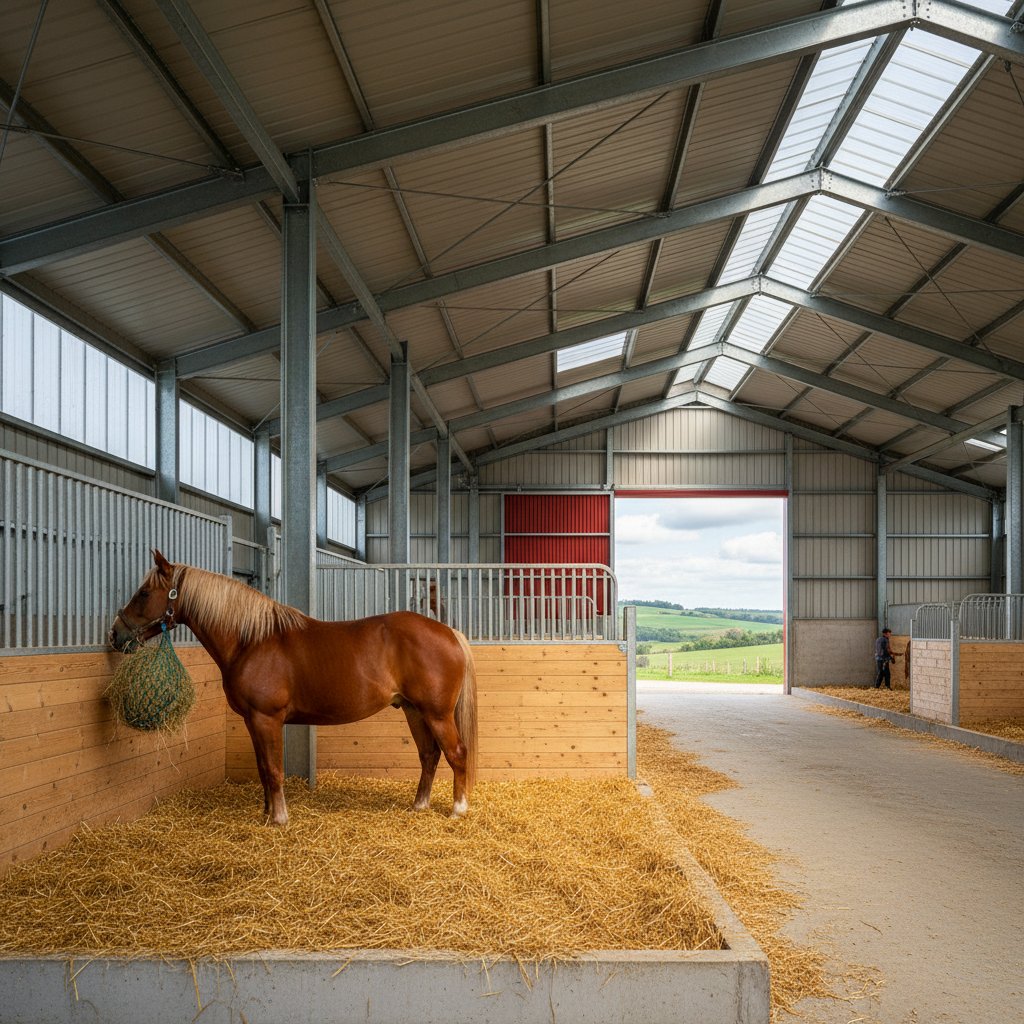
Piotr discovered Swed-Trac and was impressed. He opted for a standard width x 40m steel hangar, specifically designed to accommodate his largest machinery, provide ample grain storage, and even offer a flexible area for future hay storage. Swed-Trac's CE-certified steel building, compliant with EN 1090-2 EXC2 standards, came in significantly under budget compared to other providers. This allowed him to invest further in internal fit-out, including a robust concrete floor and efficient ventilation systems. The standard width agricultural hangar proved to be the perfect "sweet spot," offering the space and flexibility he needed without unnecessary expense or complexity, ultimately enhancing his farm's operational efficiency and securing his investment for the long term.
The Foundation of Efficiency: Optimising Hangar Dimensions for EU Agriculture
When planning an agricultural hangar, the discussion often begins with functionality and regulatory compliance. The overarching goal is to create a space that maximises operational efficiency while adhering to national and EU building standards.
Across the EU, agricultural buildings often benefit from permitted development rights, which allow construction without full planning permission up to certain size thresholds. For instance, many regulations permit agricultural buildings up to 1,000 square metres in floor area and standard width in height for dual-pitched roofs, or 5 metres for single-pitched roofs. However, for buildings exceeding 465 square metres, a "prior notification" application to the local planning authority is often required. Understanding these national nuances, from Germany's strict building codes to the more flexible approaches in other member states, is vital.
Here's a look at common hangar widths and their optimal applications for European farms:
| Hangar Width | Ideal Application | Key Benefits
Frequently asked questions
How much does a farm building cost?
An average 12×30 m hall (~360 m²) in Europe: €40,000-€75,000 depending on insulation and equipment. Exact quote based on your project.
Eligible for EU agricultural funding?
Yes - all our buildings meet EU agricultural requirements (CE marking, project documents, calculations). We help prepare funding applications.
How long does it last?
Steel structure: 50+ years. Roof sheeting: 30-40 years. Warranty: 2 years.
Can size and colour be customised?
Yes - any size (6×12 m to 30×100 m), any RAL colour for façade and roof. Options: insulation, ventilation, doors and gates.
What does transport and installation cost?
Within Lithuania: installation included in quote. Transport up to 200 km free. EU countries: by distance (typically 3-8 % of construction cost).