 Blog
Blog
A few months ago, my phone rang. It was Piotr, a grain farmer from Greater Poland. I could hear the exhaustion and sheer frustration in his voice. Two years prior, Piotr decided to save some money and bought a basic, uninsulated tin shed, which he tried to convert into a grain storage facility himself. The result? During winter, condensation dripped constantly from the freezing roof directly onto his stored wheat, causing spoilage and significant financial loss. Poor ventilation led to mould growth, and the structure itself, built to minimal standards, showed signs of buckling under a moderate snow load. To make matters worse, a local agricultural inspector paid a visit, took one look at the inadequate storage conditions, issued a heavy fine, and threatened to embargo his entire harvest under EU food safety directives.
Piotr’s problem is far from unique. Across Europe, the myth persists that an agricultural building is just a roof and some metal sheets. The truth is entirely different. In 2026, food safety, animal welfare, and structural integrity regulations are stricter than ever, demanding a completely professional approach. The Swed-Trac team fixed Piotr’s situation: we designed and installed a robust, standard width wide steel building with insulated PIR sandwich panels and a proper ventilation system, ensuring optimal conditions for his grain. Today, Piotr says: "Not worth the hassle trying to do it cheaply. I should have called the professionals from day one."
If your search history includes phrases like wide hangar how to choose, steel building, or wide-span universal hangar, you have landed exactly where you need to be. I am the lead copywriter for Swed-Trac, and in this comprehensive, expert guide, I will walk you through everything you must know before investing in an agricultural hangar. From accurate price breakdowns and common pitfalls to navigating EU structural requirements and securing CAP (Common Agricultural Policy) rural development funds. Let's get started.
1. Core facts about the Swed-Trac standard width Universal Agricultural Hangar
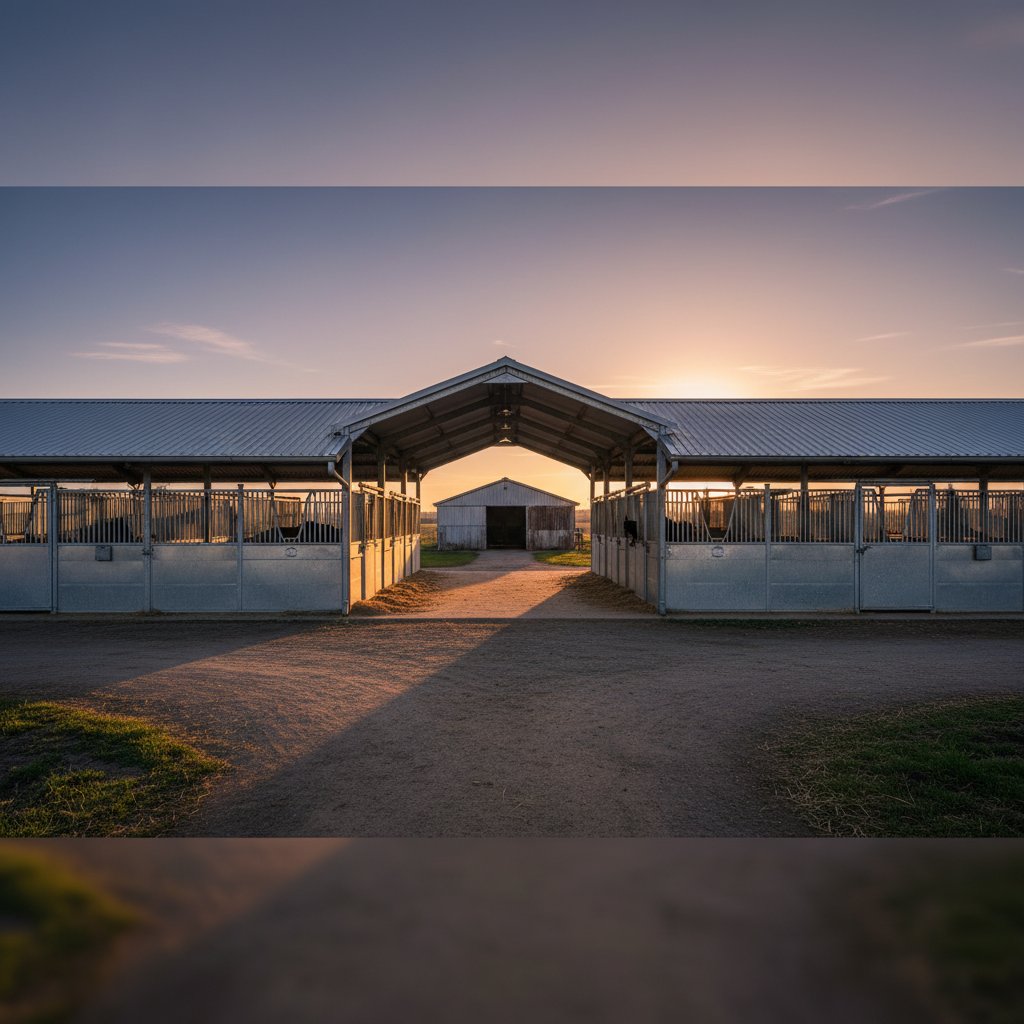
The agricultural hangar is the undisputed champion for most European farms, striking the perfect balance between versatility, cost-efficiency, and functionality. This universal width allows for optimal use across a vast range of agricultural applications - from standard width grain storage hangar and standard width machinery shed to livestock housing or general storage. While Swed-Trac offers a comprehensive range of widths including 8m (ideal for small farms or specific storage), 10m (medium farms), standard width (UNIVERSAL - RECOMMENDED), 15m (for wider machinery or larger volumes), 18m (large farms), and 20m (industrial scale), the hangar consistently proves to be the most optimal choice for the majority of our clients.
Here are the primary specifications of a standard Swed-Trac standard width agricultural hangar (example based on a standard width x 10m footprint for pricing consistency, but length is fully customisable):
| Parameter | Specification | Explanation |
|---|---|---|
| Clear Span Width | standard width (length customisable) | The most versatile width for machinery, bulk grain, feed, or livestock. |
| Example Footprint | 12 x 10 metres (120 sq. m) | A common size for a substantial steel building for various uses. |
| Construction | Structural steel (C and Z profiles) | Engineered for demanding, moisture-heavy agricultural conditions and fully certified to CE EN 1090-2. |
| Walls and roof | PIR sandwich panels (60-100 mm) | Guarantees excellent thermal insulation and entirely prevents condensation. |
| Access Gates | Sliding, e.g., 4 x 4 metres | Large, easy-to-open gates for modern agricultural machinery access. |
| Manufacturing site | Šilutė, Lithuania (HQ Klaipėda) | No shady middlemen or vague overseas agents - we manufacture everything in-house. |
2. Full price breakdown: What does a standard width agricultural hangar actually cost?
The most frequent question we get from property owners is, "What is the final price?" The internet is flooded with ads offering steel sheds for ten or twelve thousand euros. Here's the thing: those are bare metal frames wrapped in thin tin, suitable only for temporary shelter. A robust hangar designed for long-term agricultural use, protecting valuable machinery, livestock, or grain, requires an entirely different specification.
Below are three realistic pricing scenarios for a standard width x 10m (120 sq.m) standard width agricultural hangar in the European market (prices in euros, excluding VAT), showing exactly where your money goes.
| Component | Basic (Cold) | Medium (Insulated) | Premium (Professional) |
|---|---|---|---|
| Metal framework and fixings | 11,900 € | 13,300 € (Reinforced) | 14,700 € (Maximum load capacity) |
| Wall cladding | 3,500 € (Single-skin steel) | 8,100 € (PIR 60 mm panels) | 10,500 € (PIR 100 mm panels) |
| Roof cladding | 3,900 € (Steel with anti-condensation fleece) | 8,600 € (PIR 60 mm roof panels) | 11,200 € (PIR 100 mm roof panels) |
| Large Access Gates (2 units) | 2,100 € (Standard sliding) | 3,500 € (Insulated, reinforced) | 5,300 € (Insulated, automatic) |
| Internal partitions/divisions | Client sources independently | 1,200 € (Basic steel/wood) | 2,500 € (Heavy-duty, modular) |
| Ventilation & Basic Lighting | Client sources independently | 1,500 € (Ridge vents, LED strips) | 3,000 € (Automated fans, high-bay LEDs) |
| Assembly work | 4,900 € | 6,300 € | 7,700 € |
| ESTIMATED TOTAL (standard width x 10m) | ~32,100 € | ~48,700 € | ~61,900 € |
Note: Prices are indicative for the 2026 European market. Your exact quote depends on your specific region (due to varying snow/wind load engineering), chosen length, and custom modifications.
3. What’s included in the standard package - and what isn’t?
To prevent any nasty surprises, Swed-Trac operates with total transparency regarding what happens after you sign the contract. We sell complete solutions, not piles of steel, but certain site-specific tasks remain the responsibility of the landowner.
| What we handle (Included) | What the client handles (Not included) |
|---|---|
| Preliminary architectural design (drawings) | Topographical surveys and soil tests |
| Complete steel frame manufacturing (in Šilutė) | Pouring the concrete foundations (we provide exact plans) |
| Supplying and cutting PIR sandwich panels | Ground levelling and site drainage |
| Manufacturing access gates and personnel doors | Bringing electricity and water mains to the building |
| Full assembly of the frame, panels, and access points | Applying for EU CAP / EAFRD funding (though we advise) |
| Delivery to your site anywhere in Europe | Securing local planning permission from your municipality |
4. How to choose: The 12-point checklist for your hangar
If you want your standard width agricultural hangar to last for decades without constant repairs, you must plan every detail meticulously. Use our expert checklist to evaluate your project, keeping the versatility of the wide hangar in mind:
- Primary Use Case. Will it be a standard width grain storage hangar, a standard width machinery shed, livestock housing, or general storage? The standard width width is highly adaptable, but specific uses dictate internal fit-out.
- Terrain and soil. Is your chosen spot well-drained? Proper ground drainage is non-negotiable for protecting stored goods and ensuring structural stability.
- Foundation type. For a steel building, raft foundations (concrete slabs) are often ideal, providing a stable, level base. For grain storage, specific retaining walls within the foundation might be needed.
- Snow and wind loads. The engineering required for a hangar in the snowy Austrian Tyrol is vastly different from one facing the brutal coastal winds of North Holland. Our engineers always adjust the thickness of the C and Z profiles to match your local climate data, ensuring your hangar withstands extreme weather.
- Ventilation system. Adequate ventilation is crucial. For grain, it prevents moisture buildup and spoilage. For livestock, it ensures air quality. For machinery, it helps prevent condensation.
- Natural lighting. Plan for transparent roof lights or windows to reduce reliance on artificial lighting and improve the working environment inside your standard width agricultural hangar.
- Height requirements. Consider the height of your tallest machinery (e.g., combine harvesters, sprayers) or the volume of grain you need to store. A standard width width pairs well with generous eave heights.
- Access for machinery. Ensure your access gates are wide and tall enough for the largest vehicles you intend to use. The hangar width allows for excellent manoeuvring space inside.
- Floor specification. For heavy machinery, a reinforced concrete floor is essential. For bulk grain, the floor must be robust enough to handle immense point loads and potentially include retaining walls.
- Pest control considerations. If storing feed or grain, consider how to seal the building effectively against rodents and birds.
- Electrical installation. Every light fixture and switch must have a minimum IP65 rating for dust and moisture resistance, especially in agricultural environments.
- Future expansion. Might you need more space in a few years? Swed-Trac’s modular design allows you to easily unbolt a gable wall and extend your steel building later.
5. Five common buyer mistakes (and how to avoid them)
Over the years, we have seen every disaster imaginable. Here are five critical mistakes European buyers consistently make when choosing an agricultural hangar:
- Mistake 1: Skipping roof insulation. Agricultural products, machinery, and livestock all generate moisture and heat. If your roof is bare steel, condensation will form as soon as temperatures drop, leading to spoiled grain, rusted machinery, or damp, unhealthy conditions for animals. Always specify at least 60 mm PIR panels for the roof of your hangar.
- Mistake 2: Underestimating height for modern machinery. Many farmers opt for a lower eave height to save on initial costs, only to find their new combine harvester or sprayer barely fits, or requires awkward manoeuvring. Plan for ample height from the outset, especially for a standard width machinery shed.
- Mistake 3: Using cheap, painted metal for critical components. Agricultural environments are harsh, with dust, moisture, and sometimes corrosive elements from fertilisers or silage. Standard painted steel will degrade quickly. Swed-Trac uses exclusively factory-finished structural steel, engineered to withstand aggressive agricultural environments for decades.
- Mistake 4: Not planning for heavy floor loads. If you intend to store bulk grain or heavy equipment, a standard concrete slab might not suffice. Inadequate floor specification can lead to cracking, structural issues, and even collapse under immense weight. Consult with us on your specific load requirements for your standard width grain storage hangar.
- Mistake 5: Missing EAFRD funding deadlines. The EU continues to provide heavy subsidies through rural development funds for projects that improve agricultural efficiency, safety, and sustainability. Many property owners only think about these grants after they start building, which is too late. You must apply before breaking ground.
6. Competitor comparison: Why Swed-Trac?
The European market features several companies offering steel buildings. Let’s compare them objectively so you understand why Swed-Trac is the optimal choice specifically for agricultural projects, particularly for a hangar.
| Criteria | Swed-Trac | Röwer & Rüb DE | LLENTAB SE | Ydre-Grinden SE |
|---|---|---|---|---|
| Specialization | Agricultural steel structures (hangars, storage) | Luxury equestrian facilities | Industrial halls and warehouses | Equestrian and farming |
| Manufacturing | In-house (Lithuania) | Germany | Sweden / Europe | Sweden |
| Agricultural Focus | High (optimised for diverse farm needs, especially standard width width) | Low (niche equestrian) | Medium (general industrial) | Medium (general farming) |
| Price (120 sq.m, basic hangar) | ~32,100 € (complete, agricultural focus) | ~75,000 €+ (premium stable setup) | ~28,000 € (empty shell only) | ~45,000 € (general farming setup) |
| Certification | CE EN 1090-2 compliant | Fully certified | Fully certified | Fully certified |
Conclusion: If you have an unlimited budget and want a luxury showpiece, Röwer & Rüb is fantastic. If you just want an empty warehouse, LLENTAB does a great job. But if you need a highly functional, incredibly durable, and safe standard width agricultural hangar that offers the best balance of European engineering and price, Swed-Trac stands alone. Competitors might lure you in with a cheap empty shell, but once you try to retrofit proper insulation, robust access points, and the necessary structural integrity for agricultural loads, the final cost and stress will far exceed our integrated package.
7. The process from inquiry to handover: Eight clear stages
We designed our workflow to take the stress off your shoulders. The process for your new steel building is systematic and transparent.
Stage 1: Inquiry and needs analysis (1-2 days, 0 €) You contact us. We discuss your vision, farm type, site location, primary use for the hangar (e.g., standard width grain storage hangar, standard width machinery shed), and budget.
Stage 2: Preliminary design and quote (3 days, 0 €) We prepare a precise, line-by-line quote and a 3D visualization for your hangar. You see exactly what you are paying for.
Stage 3: Contract and deposit Once details are finalized, we sign the contract. A 30% deposit locks in your steel prices (crucial in today's fluctuating commodities market).
Stage 4: Planning permission (1-3 months, if applicable) Depending on your local municipality, a 120 sq. m agricultural building usually requires planning permission. We provide all the structural drawings your local architect needs to submit the application.
Stage 5: Manufacturing in Šilutė (4-6 weeks) In our Lithuanian factory, the steel for your hangar is cut, welded, and factory-finished. All panels and components are prepared to your exact specifications.
Stage 6: Foundation preparation (2 weeks, client responsibility) While we manufacture the building, your local contractor pours the concrete foundations using our precise anchor bolt plans.
Stage 7: Delivery and frame assembly (4-6 days) We deliver the materials directly to your site. Our certified assembly crews erect the steel framework for your steel building.
Stage 8: Finishing, panel installation, and handover (5-7 days) The PIR panels are fitted, gates installed, and any internal divisions assembled. The site is cleaned and the keys handed over. Your standard width agricultural hangar is ready for immediate use.
8. Technical requirements and standards
Building an agricultural hangar is not just about aesthetics. It must be legally compliant, structurally sound, and safe.
- CE EN 1090-2 Standard. Every Swed-Trac steel frame, including our hangar structures, complies with this stringent EU manufacturing standard. This proves the welding seams are flawless and the steel will hold the specified loads. Major European insurers (like Allianz or AXA) will outright refuse to pay claims if a collapsed agricultural building lacks CE certification.
- Foundation tolerances. We require the concrete foundation to have a maximum deviation of 10 mm across the entire length of the building. This guarantees the steel frame sits perfectly plumb and the heavy sliding doors glide effortlessly.
9. Real European client case studies: The hangar in Action
Theory is fine, but real-world application proves the concept. Here is how three different European clients adapted our hangar solution.
Case 1: Janusz from Mazovia, Poland (Grain Storage) Janusz needed reliable, condensation-free storage for his expanding wheat and rapeseed harvests. He opted for a standard width grain storage hangar to accommodate bulk quantities and allow easy access for loading and unloading with large equipment. The Choice: A Medium package hangar (standard width x 30m) with 60 mm PIR roof and wall panels. He specified a reinforced concrete floor with integrated retaining walls for bulk grain. The Result: Janusz secured EAFRD funding, significantly reducing his investment. His grain now remains perfectly dry and free from mould, even during humid periods, ensuring premium quality and market value.
Case 2: Klaus from Bavaria, Germany (Machinery Shed) Klaus operates a modern dairy farm with a fleet of large tractors, combines, and specialised milking equipment. He needed a secure, accessible, and well-organised space to protect his significant investment from the elements. The Choice: A Premium standard width machinery shed (standard width x 25m) with 100 mm PIR panels throughout, automated insulated access gates, and high-bay LED lighting. He also included a dedicated workshop area within the hangar. The Result: Klaus's machinery is protected from extreme Bavarian winters, reducing maintenance costs and extending equipment lifespan. The clear span of the wide hangar allows for easy parking and servicing of even his largest combine.
Case 3: Pieter from Gelderland, Netherlands (Livestock Housing & Feed Storage) Pieter needed a versatile building to house young cattle during winter and store feed year-round. He required excellent ventilation and a robust structure to withstand animal activity. The Choice: A Medium package standard width agricultural hangar (standard width x 20m) with 60 mm PIR panels, natural ridge ventilation, and reinforced internal divisions for feed bunkers and animal pens. The Result: The insulated hangar provides a comfortable, draft-free environment for his livestock, promoting health and growth. The wide span allows for efficient layout of pens and easy access for feed distribution and cleaning.
10. Decision tree: Which hangar option should you choose?
Still debating which route to take for your agricultural building? Use this simple decision tree, keeping the hangar as your optimal starting point:
-
What is the primary function of your hangar? * Grain/Feed Storage: The standard width grain storage hangar is ideal. Focus on reinforced floors, good insulation (60-100mm PIR), and controlled ventilation. * Machinery/Equipment Shed: The standard width machinery shed provides ample space. Prioritise height, large access gates, and durable flooring. * Livestock Housing: The standard width agricultural hangar offers excellent animal welfare. Focus on insulation, superior ventilation, and easy-to-clean surfaces. * General Storage/Multi-purpose: The steel building is perfectly versatile. Consider modular internal divisions and flexible access.
-
What is your budget and desired level of comfort/protection? * Under 35,000 € (for a 12x10m example): The Basic (Cold) configuration for a hangar is feasible, but always insulate the roof to prevent condensation. * Between 35,000 € and 55,000 €: The Medium (Insulated) package for a hangar offers the best value, providing robust insulation and improved features. * Over 55,000 €: Invest in the Premium (Professional) package for maximum durability, energy efficiency (100mm PIR), and advanced features like automated gates and sophisticated ventilation.
-
Do you have exceptionally large or specialised equipment, or require industrial-scale storage? * YES: While the hangar is highly versatile, consider our 15m, 18m, or even 20m wide solutions for truly oversized needs. * NO: The wide hangar will comfortably meet your requirements, offering superb efficiency and adaptability.
-
Are you a small farm with limited land or very specific, smaller-scale needs? * YES: Our 8m or 10m wide hangars might be a more compact and cost-effective solution for your specific requirements.
11. General advice and warnings
Before wrapping up, let me share a few pieces of expert advice we have gathered over years in the industry:
- Sort out your insurance. Insure the building, not just its contents. Because Swed-Trac structures carry full CE certification and are engineered to local snow/wind loads, major agricultural insurers (like Agria or Baloise) will offer you significantly better premiums for your steel building.
- Follow a maintenance calendar. Once a year (ideally late summer), check all anchor bolts and grease the sliding door tracks. Clear the gutters of autumn leaves.
- Do not miss CAP funding. If you plan to apply for EU agricultural subsidies, start preparing your dossier at least four months before the application window opens. Bureaucracy is slow. Property owners constantly miss out on thousands of euros simply because their local planning permits were delayed.
Want a quote on a hangar? Call +370 645 18595 or email sales@swedhall.se - we will prepare an individual quote within 24 hours.
12. Frequently Asked Questions (FAQ)
How much exactly does a agricultural hangar cost?
Prices for a standard width x 10m (120 sq.m) standard width agricultural hangar range from roughly 32,100 € for a basic setup to over 61,000 € for a fully insulated, premium package. The final price depends on panel thickness, internal equipment, length, and your local snow load requirements.
Do I need planning permission for a steel building?
In almost all European countries, a 120 sq. m permanent agricultural structure, such as a hangar , requires formal planning permission. The exact rules depend on your local municipality and agricultural zoning laws, but the process is generally simpler than building a residential house.
How long does manufacturing and assembly take for a hangar?
Manufacturing in our Šilutė factory takes 4-6 weeks. Assembly on your site takes just 1-2 weeks, depending on local weather conditions and the size of your steel building .
Do you help with EU CAP / EAFRD funding applications?
We do not fill out the grant applications ourselves, but we work closely with agricultural consultants. We provide all the necessary technical drawings, official quotes, and CE certificates the funding agencies demand for your standard width agricultural hangar project.
What are the benefits of a hangar compared to other widths?
The wide hangar offers exceptional versatility. It's wide enough for most modern farm machinery, provides ample clear span for bulk grain storage, and is cost-effective compared to wider industrial solutions, making it a universal recommendation for most farmers.
Can I add more sections to my hangar later?
Yes. Our steel frames are modular. If your farm operations grow, we can extend the length of your steel building seamlessly.
Do you pour the concrete foundations?
No. Foundation work is carried out by the client or their local groundworks contractor. We provide highly detailed foundation plans and anchor bolt layouts for them to follow for your hangar .
What warranty comes with a Swed-Trac agricultural hangar?
We provide a two-year structural warranty on the metal framework, fully compliant with strict EU consumer laws. The sandwich panels and hardware carry their respective manufacturers' warranties.
Will condensation drip from the roof of my hangar?
If you choose bare steel without an anti-condensation fleece or insulation, yes, it will rain inside your hangar. This is why we strongly advise using at least 60 mm PIR sandwich panels for the roof, which completely eliminates the problem, crucial for a standard width grain storage hangar or standard width machinery shed .
What are the rules for agricultural electrical wiring?
Because agricultural buildings are often dusty and moist, all wiring must be run inside heavy-duty, fire-retardant conduits. Every switch and light fitting must carry an IP65 rating to prevent shorts and fire hazards.
A properly engineered agricultural hangar is not an expense; it is a long-term investment in your farm's efficiency, your valuable assets' protection, and your own peace of mind. Stop making the same mistakes others do by trying to force cheap agricultural sheds to do a job they were never designed for. By choosing Swed-Trac, and particularly our versatile hangar solutions, you choose durability, legal compliance, and the absolute certainty that your farm operations are supported by the best possible infrastructure.
Have questions? Want a preliminary quote for your site? Let's talk.
Related articles
- [PIR Sandwich Panels: Why They Are the Best Choice for Agriculture Property owners constantly miss out on thousands of euros simply because their local planning permits were delayed.
Want a quote on a hangar? Call +370 645 18595 or email sales@swedhall.se - we will prepare an individual quote within 24 hours.
12. Frequently Asked Questions (FAQ)
1. How much exactly does a agricultural hangar cost? Prices for a standard width x 10m (120 sq.m) standard width agricultural hangar range from roughly 32,100 € for a basic setup to over 61,000 € for a fully insulated, premium package. The final price depends on panel thickness, internal equipment, length, and your local snow load requirements.
2. Do I need planning permission for a steel building? In almost all European countries, a 120 sq. m permanent agricultural structure, such as a hangar, requires formal planning permission. The exact rules depend on your local municipality and agricultural zoning laws, but the process is generally simpler than building a residential house.
3. How long does manufacturing and assembly take for a hangar? Manufacturing in our Šilutė factory takes 4-6 weeks. Assembly on your site takes just 1-2 weeks, depending on local weather conditions and the size of your steel building.
4. Do you help with EU CAP / EAFRD funding applications? We do not fill out the grant applications ourselves, but we work closely with agricultural consultants. We provide all the necessary technical drawings, official quotes, and CE certificates the funding agencies demand for your standard width agricultural hangar project.
5. What are the benefits of a hangar compared to other widths? The wide hangar offers exceptional versatility. It's wide enough for most modern farm machinery, provides ample clear span for bulk grain storage, and is cost-effective compared to wider industrial solutions, making it a universal recommendation for most farmers.
6. Can I add more sections to my hangar later? Yes. Our steel frames are modular. If your farm operations grow, we can extend the length of your steel building seamlessly.
7. Do you pour the concrete foundations? No. Foundation work is carried out by the client or their local groundworks contractor. We provide highly detailed foundation plans and anchor bolt layouts for them to follow for your hangar.
8. What warranty comes with a Swed-Trac agricultural hangar? We provide a two-year structural warranty on the metal framework, fully compliant with strict EU consumer laws. The sandwich panels and hardware carry their respective manufacturers' warranties.
9. Will condensation drip from the roof of my hangar? If you choose bare steel without an anti-condensation fleece or insulation, yes, it will rain inside your hangar. This is why we strongly advise using at least 60 mm PIR sandwich panels for the roof, which completely eliminates the problem, crucial for a standard width grain storage hangar or standard width machinery shed.
10. What are the rules for agricultural electrical wiring? Because agricultural buildings are often dusty and moist, all wiring must be run inside heavy-duty, fire-retardant conduits. Every switch and light fitting must carry an IP65 rating to prevent shorts and fire hazards.
A properly engineered agricultural hangar is not an expense; it is a long-term investment in your farm's efficiency, your valuable assets' protection, and your own peace of mind. Stop making the same mistakes others do by trying to force cheap agricultural sheds to do a job they were never designed for. By choosing Swed-Trac, and particularly our versatile hangar solutions, you choose durability, legal compliance, and the absolute certainty that your farm operations are supported by the best possible infrastructure.
Have questions? Want a preliminary quote for your site? Let's talk.
Related articles
- [PIR Sandwich Panels: Why They Are the Best Choice for Agriculture