 Blog
Blog
The Beginning: Why Standard Agricultural Buildings Often Disappoint
Anna, a grain farmer in Poland, faced a common dilemma. Her existing storage facilities were aging, inefficient, and struggled to cope with increasing yields. Building a new, traditional concrete structure meant navigating endless bureaucracy and facing prohibitive costs. "I needed a versatile solution that could not only store my grain safely but also house my machinery during winter and potentially adapt for livestock in the future. I definitely did not want to spend my mornings worrying about a leaking roof or inadequate space," Anna explained.
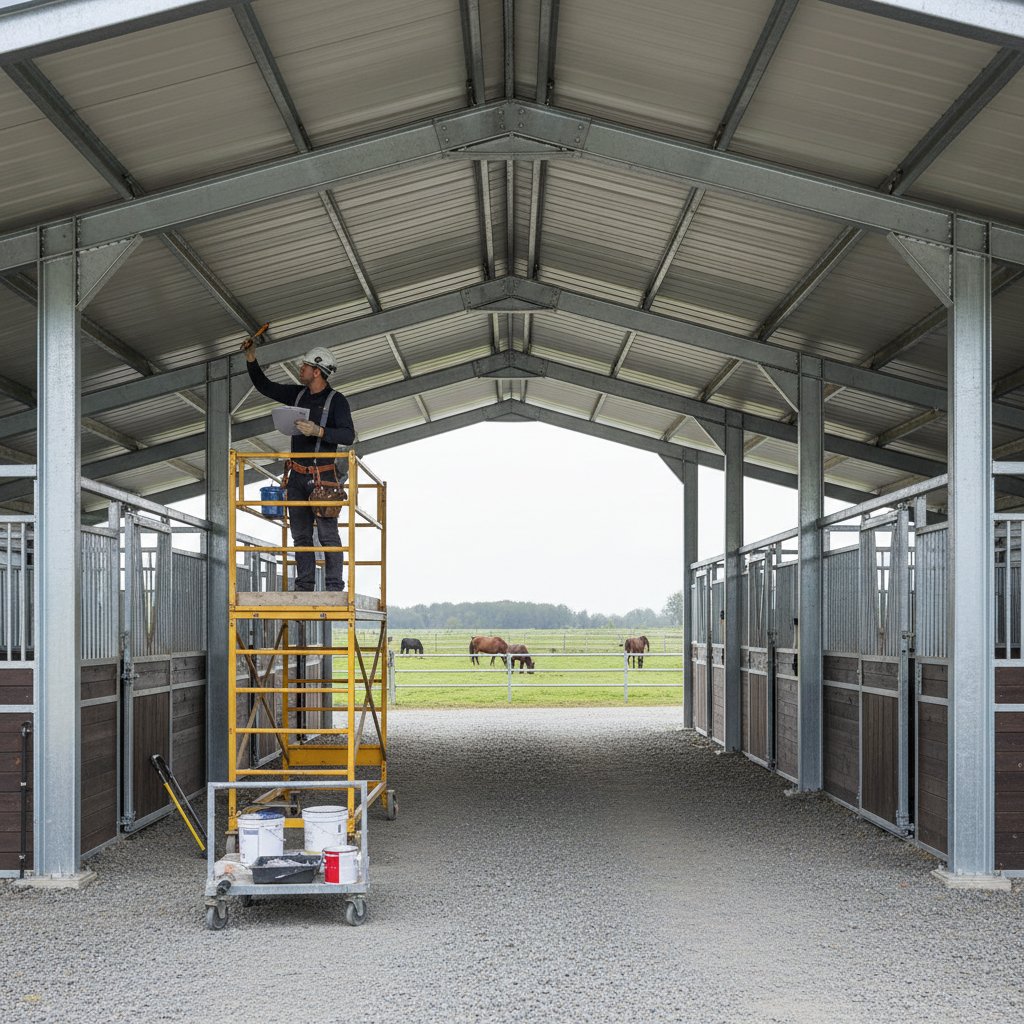
This exact scenario is what the Swed-Trac range of agricultural steel hangars is designed to solve, with our wide hangar emerging as the optimal choice for most farmers across the EU. This is not just a generic steel structure; it is a precisely engineered building system tailored to the diverse and demanding needs of modern agriculture. Whether it's protecting valuable machinery, storing feed and grain, or providing shelter for livestock, an agricultural building must withstand heavy loads, corrosive environments, and constant use. If a building is not specifically adapted to these harsh realities, it will start falling apart in just a few years.
In this comprehensive guide, updated for the 2026 European market landscape, we answer every question you might have about selecting, building, and maintaining your Swed-Trac agricultural hangar. We break down the real costs of a premium steel building, map out the exact maintenance schedule, highlight the most common pitfalls, and explain exactly how Swed-Trac guarantees decades of structural integrity. If you plan to invest in a new agricultural building across Germany, France, the Netherlands, or anywhere else in Europe, this article contains everything you need to make the right call-and ensure you never regret it.
Core Facts: Swed-Trac Agricultural Hangar Specifications and Width Options
Before we dive into pricing structures and maintenance calendars, you need to understand exactly what product we are discussing. The Swed-Trac agricultural hangar is not a temporary shelter or a flimsy agricultural tent. It is a robust, permanent steel building fully compliant with strict European Union standards (EN 1090-2). We manufacture the steel frame entirely in our own factory in Šilutė, Lithuania, while our headquarters in Klaipėda coordinates all engineering and pan-European logistics.
Swed-Trac offers a versatile range of widths to suit every farm size and requirement: * 8m wide hangar: Ideal for smaller farms or specific storage needs. * 10m wide hangar: A good choice for medium-sized operations requiring more space. * hangar: (UNIVERSAL - RECOMMENDED) This is our flagship and most popular option, offering unparalleled versatility and cost-effectiveness for grain, machinery, livestock, and general storage. * 15m wide hangar: For those needing a bit more space for larger machinery or increased capacity. * 18m wide hangar: Suitable for large farms with significant storage or operational needs. * 20m wide hangar: Our widest option, often chosen for industrial-scale agricultural enterprises.
The table below outlines the core specifications to give you a clear picture of the build quality, particularly focusing on our recommended steel building.
| Parameter | Specification & Description |
|---|---|
| Width Options | 8m, 10m, standard width (Universal), 15m, 18m, 20m |
| Construction Class | EXC2 (per EN 1090-2), structural steel |
| Wall Cladding | Profiled steel sheets, insulated sandwich panels, or timber options |
| Roofing | Profiled steel sheet with anti-condensation membrane or insulated sandwich panels |
| Ventilation | Natural airflow (roof ridge gaps, vents) or forced ventilation systems |
| Production Site | Lithuania (Šilutė) |
When you choose a Swed-Trac agricultural hangar, especially a standard width agricultural hangar, you invest in a fully resolved architectural solution. Our wide-span universal hangars are designed to meet diverse functional requirements, easily passing inspections from national agricultural and veterinary services across the EU, whether you're storing grain, housing cattle, or protecting valuable machinery.
Full Price Breakdown: What Does a standard width Agricultural Hangar Actually Cost?
Price dictates the project. Across the European market, manufacturers frequently advertise a ridiculously low price for a "naked" structural frame. The client then gets a massive shock when the final invoice doubles after adding walls, doors, and roofing. Swed-Trac values absolute transparency. You need a realistic budget right from day one for your hangar.
Below are three different configuration scenarios and their estimated costs for a standard-length hangar for the 2026 European market (prices are in EUR, excluding VAT).
| Component / Scenario | Basic (Essential Protection) | Medium (Highly Recommended) | Premium (Top Tier) |
|---|---|---|---|
| standard width Steel Structure | 18,500 EUR | 18,500 EUR | 18,500 EUR |
| Roofing | 5,500 EUR (Anti-condensation) | 5,500 EUR (Anti-condensation) | 10,500 EUR (Sandwich panels) |
| Wall Cladding | 7,000 EUR (Steel sheet) | 8,500 EUR (Sheet + skylights) | 12,500 EUR (Sandwich panels) |
| Doors (e.g., Sliding) | 3,000 EUR | 4,000 EUR | 5,500 EUR |
| Delivery & Assembly | 5,000 EUR | 6,000 EUR | 7,500 EUR |
| Total Estimated Cost for hangar | ~39,000 EUR | ~42,500 EUR | ~54,500 EUR |
Note: Final prices may fluctuate slightly depending on your exact location in Europe, the chosen length of the steel building, and current raw material index rates. The hangar offers an excellent balance of cost and functionality.
The Medium scenario remains our most popular choice across Europe for a standard width agricultural hangar. The combination of robust steel cladding with added natural light ensures excellent functionality for various uses, from a standard width grain storage hangar to a standard width machinery shed. Investing in quality roofing and cladding pays dividends in protecting your assets and ensuring a comfortable working environment.
What is Included in the Package and What You Need to Handle Yourself
You must know exactly where the manufacturer's responsibility ends and where your job as the property owner begins. We supply a complete above-ground package for your hangar, but certain infrastructure elements remain firmly in your court.
| What Swed-Trac Provides | What the Client Must Prepare |
|---|---|
| ✅ Steel frame (e.g., for hangar) | ❌ Land leveling and foundation pouring |
| ✅ Roof and wall claddings with fasteners | ❌ Water and sewage connections (if required) |
| ✅ Doors (e.g., sliding or roller doors) | ❌ Electrical wiring and lighting installation |
| ✅ All mounting bolts and heavy hardware | ❌ Local building permits (we provide all structural drawings) |
| ✅ Professional assembly (if ordered) | ❌ Internal fit-out (e.g., grain walls, livestock pens, shelving) |
Once you sign a contract with Swed-Trac, we immediately hand over detailed foundation drawings. Your local groundworkers can then prepare the perfect concrete base while we manufacture the steel for your steel building.
Maintenance and Durability: Schedule from Day One to Year Five
An agricultural hangar is a critical asset, constantly exposed to the elements and internal wear. We engineer our structures, including every hangar, to withstand severe punishment, but proper maintenance remains non-negotiable. Follow this expert maintenance calendar to ensure your Swed-Trac building stands strong for decades.
Daily Maintenance
- Ventilation checks: Ensure any ventilation systems or natural airflow gaps remain unobstructed, especially if housing livestock or storing moisture-sensitive goods like grain. Proper airflow prevents condensation and maintains air quality.
Monthly Maintenance
- Door and moving parts lubrication: Lubricate sliding door tracks, rollers, and hinges with a high-quality silicone spray. The agricultural environment is often dusty, and debris can cause wear on moving parts if left dry.
- General cleanliness: If applicable, clean internal wall claddings, especially in livestock areas, to prevent buildup of corrosive substances.
Annual Maintenance
- Visual structural inspection: Walk around the building every spring after the winter season. Look for any loose roofing screws or wall fasteners. Extreme temperature swings can cause metal to expand and contract, occasionally loosening components. Pay close attention to the steel building's frame.
- Drainage checks: Ensure gutters and downpipes are clear of debris to allow for effective rainwater runoff, protecting the foundation and walls.
Every Five Years
- Roof cleaning: Wash the roof to remove accumulated moss, algae, and dirt. This is especially critical if your hangar sits under large trees.
- Foundation and anchor checks: Inspect the exact points where the steel columns bolt into the concrete foundation. This joint is a critical stress point and must remain perfectly isolated from standing water. Ensure the integrity of your hangar's base.
Warranty: Swed-Trac provides a long-term structural warranty because we strictly control every single step of the manufacturing process in Šilutė. However, this warranty only holds up if you use the building as intended and follow basic maintenance protocols. Our precision-engineered steel frame is a key feature of every standard width agricultural hangar we build.
Competitor Comparison: Swed-Trac vs. Market Players
The European market features several heavy hitters in the steel building sector. Names like LLENTAB (Sweden), Frisomat (Belgium), and Astron (Luxembourg) come up constantly. But do they all offer the optimal blend of specialization, quality, and value, especially for a hangar? Let's look at the data.
| Criteria | Swed-Trac | LLENTAB | Frisomat | Astron |
|---|---|---|---|---|
| Agricultural Specialization | Yes (focused on farm needs, optimal standard width width) | No (general industrial/agri) | Yes (general industrial/agri) | No (general industrial/commercial) |
| Production Site | Lithuania (Šilutė) | Sweden / Europe | Belgium / Europe | Luxembourg / Europe |
| CE EN 1090-2 Compliance | Yes, EXC2 Class | Yes | Yes | Yes |
| Price Level (for hangar) | Medium (direct from factory) | High | High | Very High |
| Core Product Focus | Versatile agricultural hangars (especially standard width) | Large-scale industrial halls | Prefab steel buildings | Large industrial/commercial buildings |
Looking at the landscape, companies like LLENTAB, Frisomat, and Astron build fantastic, highly durable steel halls. However, their focus is often broader, encompassing general industry and large commercial projects. While they can provide a shell, adapting it specifically for the diverse needs of a working farm - whether it's a standard width grain storage hangar with specific ventilation or a standard width machinery shed with robust access - often requires additional contractors and significant customization.
Swed-Trac hits the sweet spot. We deliver the complete, specialized agricultural package, including our highly recommended hangar, from a single source, directly from our factory. It's simply not worth the hassle to piece a complex agricultural building together using multiple contractors when we handle the entire ecosystem, ensuring your steel building is fit for purpose from day one.
The Process from Inquiry to Handing Over the Keys
How does working with Swed-Trac actually function? We operate on a strict, eight-step process designed to eliminate confusion and delays, ensuring your hangar project runs smoothly.
- Initial contact and needs analysis (Day 1): You call us. We discuss your farm's requirements, the type of operations (grain, machinery, livestock), your preferred width (e.g., a hangar), and your realistic budget.
- Commercial offer (Days 2-3): We send over a detailed, itemized quote featuring a few different configuration options for your chosen hangar size.
- Contract signing and deposit (Week 1): Once you sign, we lock your project into our factory's production schedule.
- Foundation drawings handover (Week 2): We give you the exact blueprints so your local groundworkers can start pouring the concrete for your steel building.
- Production in Šilutė (Weeks 3-6): We cut, weld, and finish the steel. We prepare all roof and wall claddings.
- Delivery to site (Week 7): The entire flat-packed hangar arrives at your property via heavy freight.
- Assembly work (Weeks 8-9): Our professional European assembly crew erects the building. A standard hangar goes up remarkably fast.
- Handover and briefing (End of Week 9): We hand over the keys, walk you through the maintenance nuances, and shake hands.
Technical Requirements: Foundation, Standards, and EU Regulations
You cannot just drop an agricultural hangar on an empty field. Every successful agricultural build relies on three core technical pillars.
1. The Foundation. The steel frame itself is relatively light, but wind loads across Europe-especially in coastal regions like Normandy, Jutland, or North Holland-are severe. We strongly recommend drilled pier foundations connected by a reinforced concrete grade beam, or a fully engineered solid concrete slab. Make sure your local contractor builds the foundation to support the specific loads of your standard width agricultural hangar.
2. EN 1090-2 Standard. Every single piece of structural steel we produce complies with the EN 1090-2 standard and carries the CE mark. This proves that every weld passes inspection and the steel's load-bearing capacity meets strict European Union regulations. This certification is absolutely vital when you apply for local building permits or try to insure the facility with major providers like Allianz, AXA, or Länsförsäkringar. Our steel building frames are built to these exacting standards.
3. Relevant EU Regulations. Depending on the intended use of your hangar, various EU regulations may apply. For example, if you plan to use your hangar for livestock, specific directives on animal welfare (e.g., stable dimensions, ventilation, natural light) must be met. For grain storage, considerations for moisture control and pest prevention are paramount. The Swed-Trac design team ensures that our standard models are adaptable to exceed these requirements, guaranteeing you will pass local inspections without breaking a sweat.
Real Customer Cases: Three Different Farms Across Europe
Theory is great, but real-world application proves the concept. Here is how a Swed-Trac hangar transformed daily operations for three different European farmers.
Jonas's Dairy Farm (Lithuania) Jonas needed a versatile building to house young stock and store feed. He chose a hangar with insulated sandwich panels for the roof and walls. This setup provides a stable indoor temperature, crucial for animal welfare during harsh Lithuanian winters and hot summers. "The standard width width gives me ample space for pens and a central feeding alley. The quality is exceptional, and the building went up so quickly," Jonas reported.
Dirk's Arable Farm (Netherlands) Dirk required a robust standard width grain storage hangar that could also double as a standard width machinery shed during the off-season. He opted for a basic configuration with a steel sheet roof with an anti-condensation membrane and high side walls for maximum storage volume. "The standard width width is perfect for maneuvering my combine harvester and tractors. The anti-condensation roof is a must for grain, and it's performing flawlessly, even with the humidity near the coast," Dirk commented.
Maria's Organic Farm (Sweden) Maria needed a flexible, wide-span universal hangar for her organic farm, suitable for storing hay, implements, and occasionally sheltering sheep. She chose a steel building with open bays on one side for easy access and a fully enclosed section for secure storage. "The build quality was key for me, given the harsh Swedish winters. The standard width width allows me to easily organize different zones within the same building, making my operations much more efficient," Maria stated.
Decision Tree: How to Choose the Right Configuration for Your hangar?
Not sure which setup fits your property? Ask yourself these three questions, keeping the hangar in mind as your versatile starting point:
-
Will you be housing temperature-sensitive livestock or storing delicate crops (e.g., potatoes, specific grains)? * Yes. Choose the "Premium" configuration with insulated sandwich panels for optimal climate control. * No, primarily machinery, hay, or hardy livestock. The basic or medium version with an anti-condensation roof will work perfectly.
-
Do you need maximum natural light inside the hangar? * Yes. Opt for the "Medium" or "Premium" configurations which include skylights or translucent wall panels. This reduces electricity costs and improves the working environment. * No, primarily dark storage or specific uses. The basic steel sheet walls are sufficient.
-
Is your budget strictly limited, but you still need a durable steel building? * Yes. Go for the basic model, but never cut costs by removing the roof's anti-condensation membrane. Condensation dripping onto machinery, feed, or even livestock can lead to significant problems.
Financing and EU CAP / EAFRD Support in 2026
Building an agricultural hangar requires serious capital, but European farmers and rural business owners have excellent avenues to reduce the financial burden. In 2026, the EU's Common Agricultural Policy (CAP) and the European Agricultural Fund for Rural Development (EAFRD) continue to offer substantial grants for rural infrastructure.
Depending on your country, young farmer establishment grants usually open in the first quarter of the year, while broader funds targeting "Sustainable Agricultural Investments" often accept applications in the autumn.
Because every Swed-Trac building, including our hangar range, carries full CE marking and complies with EN 1090-2, our technical quotes and structural blueprints sail smoothly through the approval processes of both EU grant evaluators and major agricultural banks like ING, Crédit Agricole, and Sparkasse. We provide the exact technical documentation you need to support your funding application.
General Advice and Common Mistakes When Building an Agricultural Hangar
Over years of manufacturing and assembling agricultural buildings, we see first-time builders make the same costly errors. Avoid these traps when planning your hangar:
- Skimping on the groundwork. If your concrete foundation is uneven, the steel frame will sit slightly twisted. Within months, large sliding doors will start jamming, and the roof sheets will lose their watertight seal. Get the concrete right for your steel building.
- Inadequate access points. Consider the size of your largest machinery. Ensure your doors are wide and tall enough. For a standard width machinery shed, this is particularly important for ease of access and safety.
- Poor ventilation for specific uses. If you're planning a standard width grain storage hangar, proper ventilation is critical to prevent spoilage. For livestock, it's essential for animal health. Don't compromise on airflow.
Want a quote on a hangar? Call +370 645 18595 or email sales@swedhall.se - we will prepare an individual quote within 24 hours.
Frequently Asked Questions (FAQ)
How long does it take to manufacture and build a hangar?
From the day you sign the contract to the day we hand over the keys, the process typically takes about eight weeks. The actual physical assembly on your property for a standard hangar takes just one to two weeks.
Do I need a building permit for this structure?
Almost certainly yes, as it is a permanent agricultural building. We supply all the necessary engineering and structural drawings for your local architect to submit to the planning office for your steel building .
Can I expand a hangar later and add more length?
Yes. Our steel frame uses a modular design. You can easily unbolt the end wall, extend the roofline, and add more sections in the future to increase the length of your standard width agricultural hangar .
What is the Swed-Trac warranty policy?
We provide a long-term warranty on the load-bearing steel structure. Moving parts, such as door rollers and hinges, carry a standard two-year warranty, provided you follow the monthly maintenance schedule.
Can I use EU agricultural grants to fund a Swed-Trac hangar?
Yes. Our buildings meet all CE and EN 1090-2 standards, making them fully eligible for EAFRD and national rural development funding programs. This applies to all our widths, including the hangar .
What materials do you use for wall cladding?
You can choose between durable profiled steel sheets, often with skylight options, or highly insulated sandwich panels for superior thermal performance.
Will condensation drip from the roof in winter?
No, provided you select either the steel roof with a factory-applied anti-condensation membrane or the fully insulated sandwich panels. Both options prevent dripping, crucial for a standard width grain storage hangar or standard width machinery shed .
How do I clean the steel cladding?
For general cleaning, a low-pressure wash with mild detergent is usually sufficient. For tougher stains, consult specific cleaning guidelines for coated steel.
Do you offer assembly services across Europe?
Yes, our professional assembly crews travel and operate across our core European markets, from Denmark down to Austria, ensuring your steel building is erected correctly.
Will the building survive violent winter storms?
Yes. We engineer the steel frame specifically to handle the heavy wind and snow load zones of your exact European region, ensuring total safety even on exposed sites. This robust design applies to every hangar we produce.
Can I assemble the hangar myself to save money?
Theoretically, yes. We can deliver the materials package with full instructions. However, we strongly recommend using our professional crews to guarantee structural integrity and keep your full warranty intact.
Where exactly are these buildings manufactured?
We handle the entire production process-from cutting the raw steel to the final factory finishing-in our own factory located in Šilutė, Lithuania.
Investing in a proper agricultural hangar is a major decision that will impact your farm's efficiency and asset protection for decades. By choosing a Swed-Trac hangar, you choose peace of mind, rugged durability, and precision engineering that meets the absolute highest European standards, offering unparalleled versatility for grain, machinery, livestock, and general storage.
Ready to discuss your vision or need a bespoke commercial offer for your property? Contact our team today.