 Blog
Blog
Maria from Pomerania, Poland, faced a common challenge for many European farmers. Her farm was expanding, and with a bumper harvest expected, she desperately needed more grain storage. Her existing sheds were full, and the old timber structure used for machinery was barely holding up. She also planned to diversify into free-range poultry, requiring a versatile, well-ventilated space. When Maria decided to invest in a new agricultural building, she encountered a labyrinth of regulations: local planning permissions, EU animal welfare standards (if housing livestock), strict requirements from agricultural insurers, and European steel construction norms. The thought of navigating the paperwork alone seemed almost as daunting as the construction itself.
That was precisely when she contacted the Swed-Trac office in Klaipėda. We explained one simple truth: a smartly designed steel agricultural hangar, particularly our hangar, offers unparalleled versatility and often streamlines the regulatory process, provided you partner with an expert who understands the European landscape. The hangar is our universal recommendation, perfectly balancing capacity, cost-efficiency, and ease of permitting for most agricultural needs - from standard width grain storage hangar to a standard width machinery shed or livestock housing.
In this detailed guide, we will untangle everything regarding standard width agricultural hangar regulations and certificates. From the initial concept to handing over the keys, we will discuss openly and without any sugar-coating exactly which permits are required in 2026, why the CE EN 1090-2 standard is mandatory for your steel building, and how to avoid massive fines from local inspectors like the State Agricultural Inspectorate in Poland or the Landwirtschaftsamt in Germany. If you are planning to build a new agricultural facility, this article is the only document you will need before making a decision.
Core facts about Swed-Trac agricultural hangars
Before diving into the legal nuances, we must clearly define the building we are talking about. Swed-Trac manufactures steel hangars designed specifically for the European climate and legal landscape. While we offer a range of widths, the agricultural hangar stands out as the optimal, universal choice for most agricultural applications. Here are the main parameters of our structures:
| Parameter | Specification | Explanation |
|---|---|---|
| Available Widths | 8m, 10m, standard width (UNIVERSAL - RECOMMENDED), 15m, 18m, 20m | Our range caters to all farm sizes, with standard width being the most versatile. |
| Recommended Width | standard width | The hangar offers optimal space for machinery, grain, feed, and livestock. |
| Typical Uses | Grain storage, machinery shed, livestock housing, general storage | The wide-span universal hangar design adapts to diverse agricultural needs. |
| Building class | Simplified agricultural structure | Classified strictly for agricultural use. |
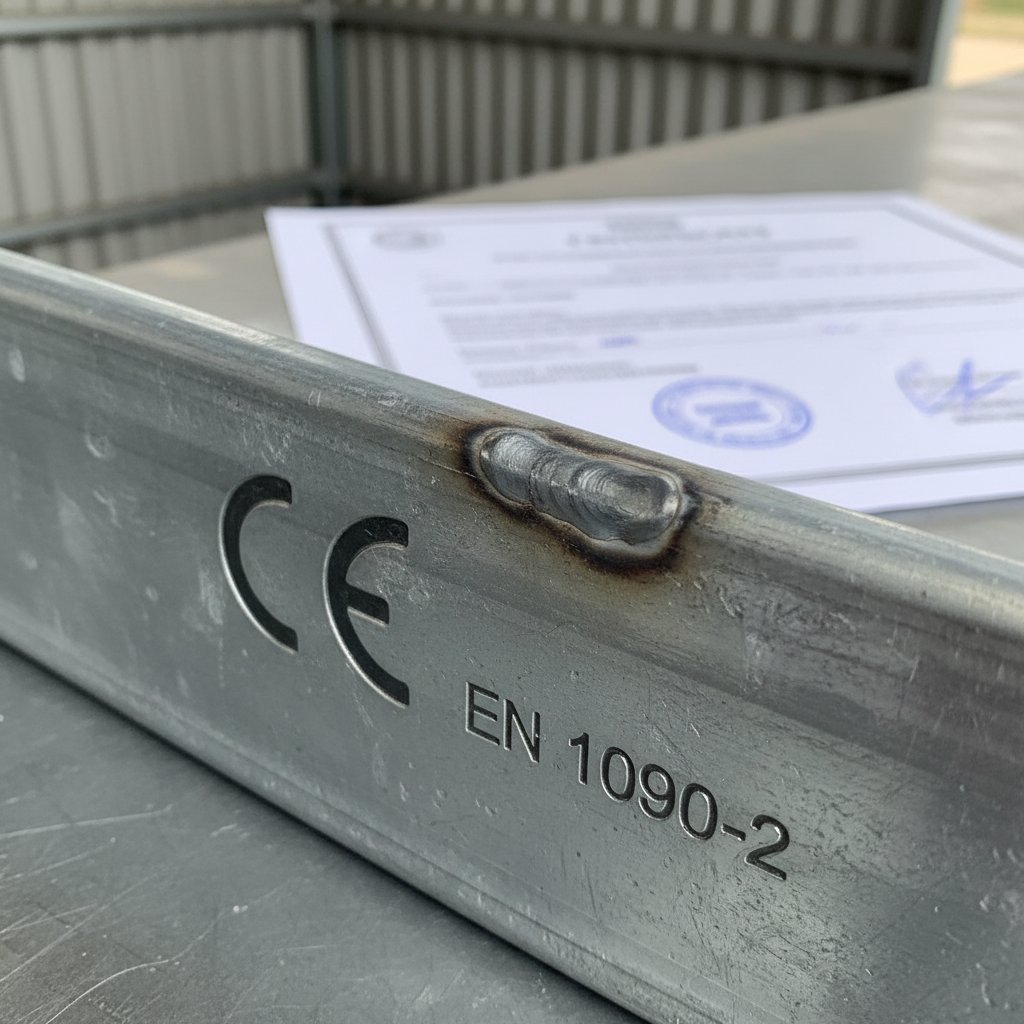
| Steel standard | CE EN 1090-2 (EXC2 class) | Mandatory across the European Union, guarantees metal quality and structural integrity. |
| Production site | Šilutė, Lithuania | High-tech EU manufacturing ensures strict quality control and cost efficiency. |
| Warranty | Two years | Applies to the load-bearing steel structures. |
The hangar is our flagship product because it provides the perfect balance: wide enough for modern combine harvesters and tractors, spacious enough for efficient grain storage bays, and adaptable for comfortable livestock housing with ample ventilation. For smaller farms, 8m or 10m hangars might suffice. Larger operations might opt for 15m, 18m, or even 20m wide industrial-scale buildings. However, the agricultural hangar consistently proves to be the most practical and cost-effective solution for the majority of European farmers.
Full price breakdown: What does a steel building actually cost?
One of the most frequent questions farmers ask is, "what will this actually cost me?". The internet is full of misleading adverts offering to build a hangar for pennies, yet completely hiding the true taxes, delivery fees, and foundation costs. Below, we provide realistic 2026 European market prices in euros for our recommended hangar. We have created three different scenarios based on distinct client requirements, varying by length and insulation level.
| Component | Base Estimate (standard width x 20m) | Standard Estimate (standard width x 30m) | Premium Class (standard width x 40m) |
|---|---|---|---|
| Steel structure (CE certified) | 28,000 EUR | 42,000 EUR | 60,000 EUR (reinforced for Alpine snow) |
| Roof and wall cladding | 8,000 EUR (uninsulated steel) | 16,000 EUR (partial insulation) | 28,000 EUR (PIR sandwich panels) |
| Doors & access (e.g., 2 large sliding doors) | 4,000 EUR | 6,000 EUR | 8,000 EUR |
| Assembly work | 7,000 EUR | 10,000 EUR | 14,000 EUR |
| Documentation and drawings | 1,000 EUR | 1,500 EUR | 2,000 EUR (with full project liaison) |
| Total preliminary sum (excl. VAT) | 48,000 EUR | 75,500 EUR | 112,000 EUR |
Note: Prices are indicative and can fluctuate depending on your exact location in Europe (from Ireland to Austria) and current raw material exchange rates. Steel prices, for instance, have seen significant fluctuations due to supply chain disruptions and energy costs, and the introduction of CBAM (Carbon Border Adjustment Mechanism) in 2026 is also impacting costs. On average, steel buildings can range from €100 to €1000 per square metre for a full project, depending on complexity and finishes.
What is included and what is not included in the estimate
Transparency is the Swed-Trac calling card. We never promise things we cannot deliver, and we always clearly show the boundaries where our responsibility ends and your homework as the client begins.
| Included in the Swed-Trac package | Not included (client responsibility) |
|---|---|
| Manufacture of certified steel (S355) frame in Šilutė | Changing land use designation (if required) |
| All fasteners, anchors, and structural bolts | Pouring foundations (we can recommend local partners) |
| Roof and wall cladding according to chosen thermal class | Internal utility networks (electricity, plumbing, drainage) |
| Large sliding doors for agricultural access | State land taxes or notary fees |
| Transporting the structure to your plot in Europe | Geodetic site surveys |
| Professional assembly by our dedicated crew | Internal fit-out (e.g., grain walls, livestock stalls, specific machinery mounts) |
Rights and certificates: What you must know when building a steel building
This is where the most critical part begins. When tackling the topic of standard width agricultural hangar regulations and certificates, we must thoroughly examine the four main pillars upon which legal and safe agricultural infrastructure stands in the European Union today.
1. The building permit process: How to avoid bureaucracy with a hangar?
Planning laws across the EU share a common thread regarding rural development. Many countries offer simplified procedures or "permitted development rights" for agricultural buildings, especially in designated rural or agricultural zones. While rules vary significantly between Member States (e.g., Germany, France, Lithuania, Sweden), the total footprint of your building is a key factor.
For instance, in some regions, agricultural buildings up to 1,000 square metres (or even 1,500 sqm for larger farms) can be built without full planning permission, often requiring only prior notification to the local authority. A agricultural hangar of a typical length (e.g., 20m, 30m) often falls comfortably within these thresholds (e.g., a standard width x 30m hangar is 360 sqm). This means you can often bypass the lengthy and costly full planning permission process.
Here's the thing: this does not mean you can build anywhere and anyhow. You will still need: - A simplified building plan prepared by an architect or draughtsman. - Local municipality notification (informing the local council of your intent to build). - Boundary compliance: the building must stand at least three metres away from your neighbour's property line. If you want to build closer, you must obtain written, notarised consent from that neighbour. - Appropriate land designation: the plot must be agricultural. If it is purely residential, the procedures will be much stricter. - Height restrictions: Agricultural buildings typically must not exceed standard width in height for dual-pitched roofs.
Swed-Trac engineers design our standard width steel buildings to comply with these general principles, helping you save anywhere from six to nine months of waiting in council queues and thousands of euros you would otherwise spend on full architectural planning.
2. The CE EN 1090-2 standard: Why is it vital for your steel building?
A strict regulation applies across the entire European Union: all load-bearing steel structures must carry the CE mark and be manufactured according to the EN 1090 standard. Specifically, EN 1090-2 outlines the technical requirements for the execution of steel structures.
What does this mean in practice? If you buy cheap metal from an unverified garage welder, you have zero proof that the steel will withstand the snow loads of a Bavarian winter (which easily reach 2.5 kilonewtons per square metre) or the strong winds of the Baltic coast. At the Swed-Trac factory in Šilutė, every single steel beam is traceable. We issue a strict declaration of conformity, meaning our products are certified to Execution Class 2 (EXC2).
While some basic agricultural buildings might fall under EXC1, EXC2 is a higher standard that ensures greater reliability and is suitable for most structural requirements within commercial and agricultural buildings. This is especially vital when the building is meant to house valuable grain, expensive machinery, or livestock. If the roof collapses due to substandard metal, the legal and financial liability falls squarely on your shoulders. With our CE certificate to EXC2, you are legally protected and your investment is secure.
3. Animal welfare requirements 2026 (EU Directive 98/58/EC)
In 2026, national veterinary bodies-whether the Veterinäramt in Germany, the DGAL in France, or the NVWA in the Netherlands-enforce incredibly strict animal welfare and biosecurity rules under EU Directive 98/58/EC. This directive lays down minimum standards for the protection of animals kept for farming purposes, requiring owners to take all reasonable steps to ensure animal welfare and prevent unnecessary pain, suffering, or injury.
If your standard width agricultural hangar is intended for livestock, erecting walls is simply not enough. Inspectors will check: - Ventilation: Ammonia cannot accumulate. Our standard width steel buildings integrate natural draught ventilation chimneys and the correct roof pitch to ensure constant airflow, crucial for animal health. - Safety: Internal fixtures must have no sharp edges where an animal could injure itself. Swed-Trac uses specially designed profiles and smooth finishes. - Surfaces: Walls and floors must be easily cleaned and disinfected to prevent infections. The steel cladding we use features a special polyester coating, allowing you to wash the walls with a high-pressure jet. - Space: Animals must be given enough space appropriate to their physiological and ethological needs. The agricultural hangar provides generous space for various livestock setups, promoting better welfare.
4. Insurance policy aspects
Try insuring a DIY shed cobbled together from old materials, housing valuable machinery or a year's harvest. An insurance broker from Allianz or AXA will simply laugh you out of the room. In 2026, insurance companies demand official documentation. By presenting the CE certificate, technical passport, and warranty letter issued by Swed-Trac, your property insurance premium with providers like Agria or Generali will be significantly lower because the insurer sees minimal risk. Your steel building is non-combustible, wind-resistant, and fully certified, making it a low-risk asset.
Competitor comparison: Where do the differences lie?
The European market has several players offering steel halls and agricultural buildings. Let us compare them objectively.
| Criterion | Swed-Trac | Competitor A (DE) | Competitor B (SE) | Competitor C (NL) |
|---|---|---|---|---|
| Production site | Lithuania (Šilutė) | Germany | Sweden | Netherlands / Import |
| Focus | Versatile agricultural hangars (incl. standard width optimal) | Premium specialised buildings | General purpose industrial halls | Standard steel halls |
| CE EN 1090-2 | Yes (EXC2) | Yes | Yes | Often basic class (EXC1) |
| Structural warranty | Two years | Twenty years | Twenty years | Ten years |
| Price level | Medium | High | High | Low |
| Local support | Maximum (Direct contact) | Excellent | Good | Variable |
The truth is, Swed-Trac offers the golden mean. We do not apply the massive "Western premium" price tag, yet we maintain the absolute highest EU quality standards. Our manufacturing base in Lithuania allows us to keep production costs reasonable while delivering top-tier engineering straight to your farm. Our hangar solutions are designed for longevity and value.
The process from inquiry to handing over the keys for your standard width agricultural hangar
How does everything happen in reality? Here are ten clear steps we will walk through together:
- Initial inquiry: You call us. We discuss your vision for your steel building and the plot location.
- Site check: We evaluate whether boundary distances are maintained and if the land designation is suitable.
- Estimate agreement: We sign a contract and lock in the price for your hangar. No nasty surprises later.
- Project preparation: Our draughtsmen prepare a simplified drawing for your local council, tailored for your agricultural hangar.
- EAFRD / CAP application (if relevant): If you are seeking EU Common Agricultural Policy funding, we provide all the necessary commercial offers and certificates. CAP funding is significant across the EU, with proposals for substantial budgets post-2027 and simplified payments for small farmers.
- Production in Šilutė: While you pour the foundations, we cut, weld, and finish the steel for your steel building. This takes about four to six weeks.
- Foundation installation: Your local contractor prepares a raft foundation or pad foundations according to our specifications.
- Delivery: We transport all components directly to your yard anywhere in Europe.
- Assembly: Our dedicated crew erects your standard width agricultural hangar in five to seven working days.
- Handover and inspection: We hand over the keys, CE certificates, and technical passport. Your steel building is ready for use and any necessary inspections.
Technical requirements: What carries all the weight in your steel building?
Although a standard width agricultural hangar looks elegant, its technical foundation is serious business. - Foundations: We recommend a raft foundation with an integrated drainage system, especially for grain storage or livestock. This facilitates cleaning and prevents moisture issues. - Anchoring: We use certified chemical or mechanical anchors that are embedded deep into the concrete, ensuring your hangar withstands extreme weather. - Structure: Manufactured from S355 grade structural steel, specified to withstand the aggressive, often ammoniated, environment of agricultural settings. - Roof: An anti-condensation membrane or full insulation (PIR sandwich panels) is mandatory to stop cold water dripping and maintain stable internal temperatures, whether for grain, machinery, or animals.
Real cases from European clients with standard width hangars
Theory is fine, but practice speaks louder. Here are three different stories from our 2025 and 2026 archives across Europe, showcasing the versatility of our agricultural hangar.
Case number one: Lars from Skåne, Sweden - A standard width grain storage hangar
Lars, a grain farmer in southern Sweden, needed to expand his storage capacity urgently. His old silos were insufficient, and he wanted a flexible solution that could also house a new, larger combine harvester during winter. We designed a standard width x 40m grain storage hangar. Because the building's footprint (480 sqm) fell within simplified agricultural development guidelines in his region, Lars received approval from his local Swedish municipality in just four weeks. The hangar was built within two months of signing the contract, allowing him to store his entire harvest and protect his new machinery. The standard width width was crucial for easily manoeuvring the combine and creating efficient drive-through bays for grain trucks.
Case number two: Elena from Andalusia, Spain - A standard width livestock and feed hangar
Elena, a cattle farmer in Spain, needed a well-ventilated, easily cleaned structure for her herd during the hot summer months and for storing feed. She also wanted to ensure compliance with EU animal welfare standards to qualify for CAP subsidies. We provided a standard width x 30m agricultural hangar with advanced natural ventilation systems and washable internal cladding. Swed-Trac supplied all the necessary CE certificates and structural calculations, which Elena used to secure a significant portion of her investment through EAFRD (European Agricultural Fund for Rural Development) funding via her local bank. The standard width width provided ample space for her cattle to move freely and for large feed bales to be stored efficiently, significantly improving animal comfort and farm logistics.
Case number three: Jan from Brandenburg, Germany - A standard width machinery shed and workshop
Jan, who runs a mixed farm near Berlin, needed a robust standard width machinery shed to protect his growing fleet of modern equipment, some of which are quite wide. He also wanted an integrated workshop area. He chose a standard width x 35m steel building with a reinforced concrete floor and partial insulation for the workshop section. Due to the building's compliance with EN 1090-2 EXC2 standards and its professional documentation, Jan secured highly favourable insurance terms from his German provider. The standard width width allowed for comfortable parking of multiple large machines side-by-side, with generous clearance for maintenance and an integrated, insulated workshop that stays warm in winter.
Decision tree: Which path to choose for your agricultural hangar?
Wondering where to begin? Answer a few simple questions:
-
Is your plot in a highly protected area (national park) or a dense urban centre? - Yes: You will need full planning permission, potentially with special aesthetic requirements. - No: Move to the second question.
-
What is the primary purpose of your new building? (e.g., grain, machinery, livestock, general storage) - All of the above or multiple uses: The hangar is likely your optimal, most versatile choice. - Very small scale (e.g., small tractor only): An 8m or 10m width might suffice. - Very large scale (e.g., multiple industrial lines): Consider 15m, 18m, or 20m wide options.
-
Are you planning to apply for EU agricultural grants (CAP, EAFRD)? - Yes: Only choose fully CE-certified manufacturers like Swed-Trac, as the paying agency will scrutinise every single piece of paper. - No: Still choose a certified manufacturer for the safety of your assets, your animals, and to satisfy your insurance provider.
General advice and warnings for your steel building project
As a senior copywriter for Swed-Trac who speaks with structural engineers every single day, I want to warn you about a few common mistakes: - Never start building without a boundary survey. Your neighbour might be your best friend today, but tomorrow they could sell their plot to someone who will call the planning inspectorate over a half-metre discrepancy. - Do not cut corners on ventilation. It is simply worth the money. If your standard width grain storage hangar lacks proper airflow, you risk spoilage. If your livestock hangar is sealed like a thermos flask, you will have mould and sick animals within a single winter. - Read the contracts. If a local builder says they will "do it cheaper without the paperwork", run away. It is not worth the hassle. Without the paperwork, you do not own a legal building-you own a pile of metal that the state can order you to demolish at any time.
Want a quote on a hangar? Call +370 645 18595 or email sales@swedhall.se - we will prepare an individual quote within 24 hours.
Frequently Asked Questions (FAQ)
How long does it take to manufacture a Swed-Trac steel building?
Production in our Šilutė facility typically takes four to six weeks after receiving the deposit and confirming the final drawings.
Does your company handle the planning permissions for a standard width agricultural hangar?
We do not liaise with local councils directly, but we provide all the architectural drawings and structural calculations your local architect needs to submit the application quickly and professionally. Our designs are optimised to facilitate simplified permitting processes where possible.
Do Swed-Trac hangars meet EU Directive 98/58/EC animal welfare requirements?
Yes, one hundred percent. Our building designs, material choices, and ventilation solutions comply with all 2026 European animal welfare regulations enforced by bodies like the NVWA or Veterinäramt .
What is the warranty on the structure?
We provide a two-year warranty on the load-bearing steel frame of your steel building . The cladding and other elements are covered by their respective manufacturers' warranties (usually two years).
Can I assemble a hangar myself?
Theoretically, yes. We can supply just the structure with an assembly manual. However, we highly recommend using our professional assembly crew to maintain the full structural warranty and ensure optimal safety and longevity for your standard width agricultural hangar .
What kind of foundations need to be prepared for a hangar?
Most clients use a concrete raft foundation or pad foundations with a ground beam. We provide the exact load calculations and anchoring plan immediately after the contract is signed for your specific steel building .
Are the prices listed inclusive of VAT?
No, all prices mentioned in the article and tables exclude Value Added Tax, as the vast majority of our clients are VAT-registered agricultural businesses.
Is a Swed-Trac hangar suitable for EU CAP or EAFRD grant funding?
Yes. Our products meet all European Union standards and carry the CE mark, making them ideal for grant-funded agricultural modernisation projects. We can provide all necessary documentation.
How do I maintain a steel hangar in winter?
Maintenance is minimal. The most critical task is ensuring that the ventilation openings are not blocked by snow and periodically clearing the rainwater gutters of autumn leaves.
Can a steel building be extended later?
Yes, the beauty of steel structures is their modularity. In the future, you can easily add extra length to your agricultural hangar by extending the steel frame.
What if my plot is in a regional or national park?
In that case, you will require full planning permission and special architectural liaison so the building's appearance meets the park authority's strict aesthetic demands (for example, adding timber-effect cladding).
What are the advantages of a agricultural hangar compared to other widths?
The hangar strikes the ideal balance between capacity and cost-efficiency. It's wide enough for modern agricultural machinery, provides excellent internal flexibility for grain bays or livestock pens, and is often easier to permit than much larger industrial structures, while offering significantly more usable space than narrower alternatives. It's truly a wide-span universal hangar .
Will the building overheat in the summer?
If you choose a basic roof with just an anti-condensation membrane, it will warm up slightly. For maximum comfort in both peak summer and deep winter, especially for livestock or sensitive crops, we strongly recommend the insulated variant with PIR sandwich panels.
Is transport included in the price?
Delivery costs depend entirely on your exact location in Europe. We calculate the transport logistics from our Šilutė factory individually for every estimate.
How quickly can you start the work?
This depends heavily on the season. Spring and summer queues are always longer, so we advise planning your build and contacting us at least two to three months in advance.
Building a modern agricultural hangar does not have to be a nightmare. By understanding the legal nuances and choosing a reliable, fully certified manufacturer like Swed-Trac, the process becomes clear and entirely manageable. The Swed-Trac team is here to ensure your farm gets the best agricultural hangar possible, while you get total peace of mind regarding safety and paperwork.
Ready to take the first step towards your optimal steel building? Call our Klaipėda office directly and we will discuss your project personally.