 Blog
Blog
Karl Schmidt, a dedicated horse owner in Lower Saxony, Germany, faced a familiar dilemma a few winters ago. With 18 horses grazing his expansive pastures, he had always relied on natural windbreaks and a sturdy, if basic, three-sided lean-to. But each year, as temperatures plummeted and the North Sea winds howled, he saw his vet bills climb, his horses' coats looking duller, and their overall vitality drop. Karl knew he needed a more robust solution, one that would truly protect his herd from the harsh European winter.
He began researching, quickly discovering the significant investment required for a purpose-built winter shelter. Quotes from premium German suppliers like Röwer & Rüb were impressive in quality but equally impressive in price, often pushing past €150,000 for a multi-horse run-in structure with integrated storage. Karl needed something durable, compliant with German animal welfare standards, but also economically sensible for his mid-sized operation.
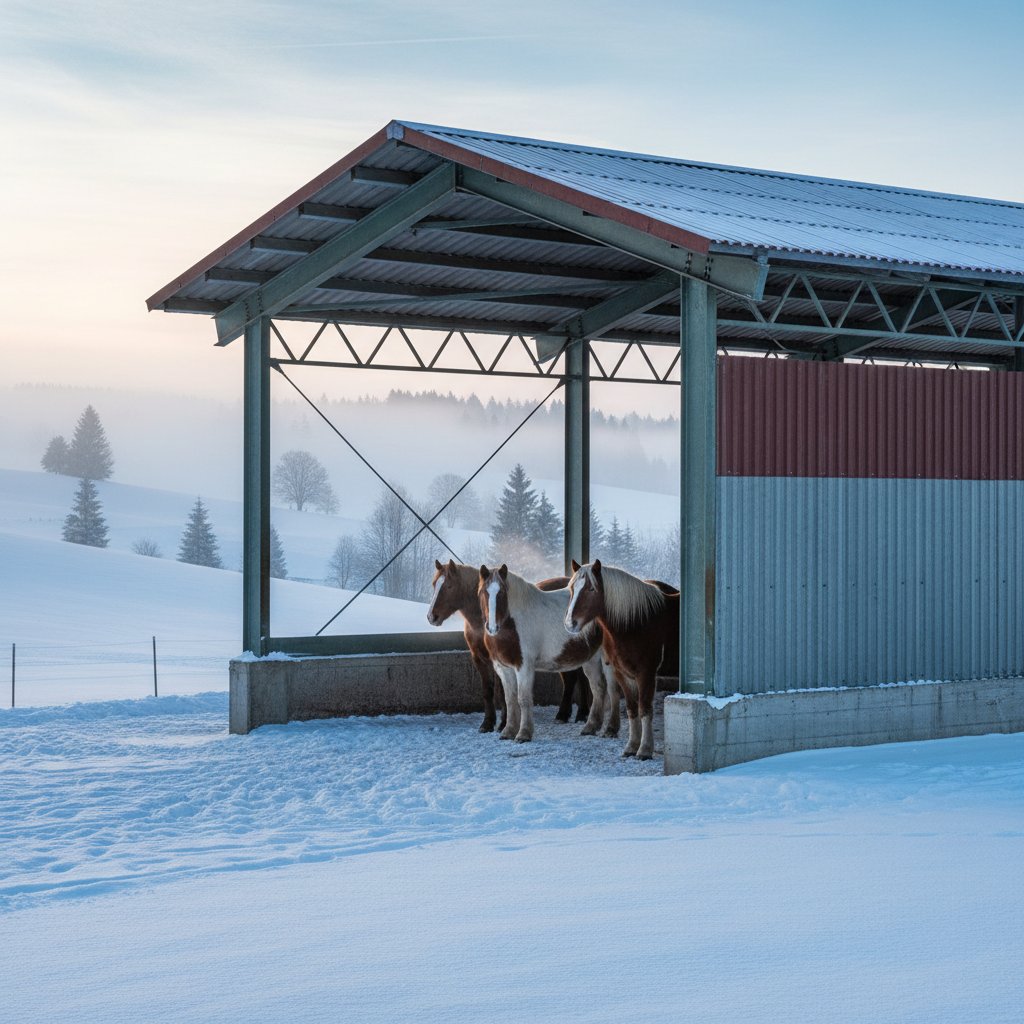
That's when he found Swed-Trac. After an initial consultation, Karl realised he could get a fully CE-certified, robust steel structure - a standard-width wide, 50-metre long steel building, providing 600m² of versatile space with partially enclosed sections and a feed storage area - for roughly 35% less than the premium German quotes. The Swed-Trac team provided detailed plans, ensuring compliance with both EU Directive 98/58/EC and the German Tierschutz-Nutztierhaltungsverordnung, specifically regarding ventilation and space. The final cost, including installation, came in just under €95,000. Today, his horses are thriving, vet visits for winter ailments are down, and Karl often remarks on how much calmer and healthier his herd is, even during the coldest months. It was an investment that truly paid off, both for his horses and his peace of mind.
Why a Dedicated Winter Shelter is Non-Negotiable
For pasture horses across Europe, a reliable winter shelter isn't merely a luxury; it's a fundamental requirement for their health, welfare, and increasingly, a legal obligation. As horse owners, we owe it to our animals to provide an environment that shields them from the elements and promotes their well-being. A versatile steel building, such as a standard width agricultural hangar, provides an ideal solution for comprehensive protection.
The truth is, while horses are resilient, prolonged exposure to cold, wet, and windy conditions can lead to a host of problems. Hypothermia, respiratory infections, muscle stiffness, and even laminitis can become more prevalent. A well-designed shelter offers essential protection from:
- Driving Rain and Snow: Keeping coats dry helps horses regulate their body temperature more effectively.
- Bitter Winds: Wind chill can dramatically increase a horse's energy requirements, leading to weight loss if not adequately managed.
- Extreme Cold: While horses have natural insulation, consistent sub-zero temperatures still put a strain on their systems.
- Mud and Poor Footing: Shelters often provide a dry, clean area for rest, reducing the risk of hoof problems.
Beyond the immediate health benefits, EU legislation, specifically EU Directive 98/58/EC concerning the protection of animals kept for farming purposes, mandates that "animals shall be cared for by a sufficient number of staff having adequate knowledge and competence" and that "housing, at least, must meet animals' physiological and ethological needs in accordance with established experience and scientific knowledge." This directive is then translated into national laws, such as Germany's Tierschutz-Nutztierhaltungsverordnung, France's DGAL (Direction générale de l'alimentation), and the Netherlands' NVWA (Nederlandse Voedsel- en Warenautoriteit), which often specify minimum shelter requirements for pasture animals. Failing to provide adequate shelter can lead to inspections and potential penalties from bodies like the German Veterinäramt.
A dedicated winter shelter also safeguards your feed, keeping hay and concentrates dry and palatable, preventing spoilage and waste. This ensures your horses receive full nutritional value from their diet, which is especially critical during colder months when their energy demands are higher.
Understanding Shelter Types and Your Horse's Needs
When planning a winter shelter, it’s crucial to consider the specific needs of your horses and the climate in your region. Not all shelters are created equal, and what works for a mild winter in southern France might be insufficient for the biting cold of Denmark or inland Germany. Swed-Trac offers a versatile range of steel hangars, designed to meet diverse agricultural needs across the EU. While we provide structures from 8m to 20m wide, our agricultural hangar stands out as the optimal and most recommended choice for the majority of European farmers and horse owners. Its universal dimensions strike the perfect balance between spaciousness, cost-efficiency, and adaptability.
Swed-Trac Steel Hangar Widths:
- 8m Wide Hangars: Ideal for smaller farms or specific needs like compact machinery storage or small-scale livestock shelters.
- 10m Wide Hangars: A good option for medium-sized operations requiring more space than an 8m structure, suitable for modest machinery or feed storage.
- standard width Wide Hangars (UNIVERSAL - RECOMMENDED): This is our flagship width, engineered to be the most versatile and cost-effective solution for most agricultural applications, including horse shelters. A steel building offers ample space for a significant number of horses to comfortably move, rest, and feed, making it an excellent standard width agricultural hangar for loose housing. Its generous span also makes it perfect for a standard width grain storage hangar, a standard width machinery shed, or a truly wide-span universal hangar that can serve multiple purposes throughout the year. We'll delve deeper into the advantages of the standard width option below.
- 15m Wide Hangars: For those needing a bit more breadth, perhaps for larger machinery or more expansive communal animal areas.
- 18m Wide Hangars: Catering to large farms or businesses with substantial storage or operational space requirements.
- 20m Wide Hangars: Our largest standard width, typically used for industrial-scale operations, very large machinery, or extensive warehousing.
Why the hangar is the Optimal Choice for Horse Owners:
A wide hangar provides an exceptional balance of internal volume and structural efficiency. For horse owners, this translates into:
- Ample Space: Even with multiple horses, a hangar ensures sufficient room for them to turn around, lie down, and move freely without feeling confined, crucial for their welfare and reducing social stress.
- Versatile Layouts: The wide, clear span allows for flexible internal configurations. You can easily create dedicated run-in areas, partially enclosed sections for feed storage, tack rooms, or even temporary sick bays within the same steel building.
- Cost-Effectiveness: Due to optimized engineering and material usage, the standard width agricultural hangar often presents the best cost-per-square-meter value, making it an economically sensible investment for long-term protection.
- Multi-purpose Use: Should your needs evolve, a wide-span universal hangar of standard width can seamlessly transition from a horse shelter to a standard width grain storage hangar or a standard width machinery shed, maximizing your investment's utility.
Key Considerations for Design and Construction
Regardless of the type or width, several critical factors must be addressed for any effective winter shelter. A steel building offers excellent flexibility to incorporate all these elements:
- Space Requirements: EU Directive 98/58/EC and national norms specify minimum box sizes. For loose housing or even just ensuring adequate space within a run-in, these guidelines are a good benchmark:
- 9m² for horses up to 160cm
- 10-12m² for horses 160-170cm
- 12-14m² for horses 170cm+ For a run-in shed, ensure enough overall covered area for all horses to comfortably stand and lie down without crowding, especially for dominant individuals. A hangar provides generous depth for this.
- Ventilation: This is often overlooked but absolutely vital. Poor ventilation leads to a build-up of ammonia, dust, and moisture, causing respiratory issues. A minimum of 150-200 m³/hour/horse is required, aiming for 10 times air exchange per hour. Steel structures can be designed with ridge vents, adjustable wall openings, or even mechanical ventilation systems to ensure optimal air quality.
- Insulation: Whether or not to insulate depends on your climate and budget.
- Uninsulated structures typically have a U-value of 5-6 W/m²K. They provide excellent protection from wind and rain but offer minimal thermal regulation. Condensation can be an issue in colder climates.
- Insulated structures (U-value 0.25-0.35 W/m²K) offer significantly better temperature stability, reducing extreme cold in winter and heat in summer. They virtually eliminate condensation, creating a healthier, more comfortable environment. For colder regions or if horses will spend extended periods inside, insulation is worth the money.
- Foundation: A solid foundation is paramount for structural stability and longevity. The depth of the concrete foundation needs to be below the frost line to prevent heaving: 1.2m in countries like Lithuania or Sweden, and 0.8m in central EU regions. Swed-Trac provides detailed foundation plans tailored to your specific location.
- Steel Quality and Certification: This is where Swed-Trac truly shines. All our structures are CE per EN 1090-2, execution class EXC2 (EXC3 available on request), certified by notified body 1487 (Lithuanian Standardization Department). This isn't just a label; it means every weld, every bolt, every structural component meets stringent EU safety and quality standards - ensuring your investment lasts for decades, whether it's an 8m shed or a standard width agricultural hangar.
The Swed-Trac Advantage: Quality, Compliance, and Value
When considering a major investment like a winter horse shelter, you want a partner who understands both construction and equine welfare. Swed-Trac, a Lithuanian manufacturer founded in 2015, brings a unique blend of European engineering excellence and competitive pricing to the market.
Based in the Kaunas area, with a factory in Šilutė/Kaunas, our team of 35 dedicated employees has successfully delivered over 2,630 projects across Europe. We are not just builders; we are specialists in steel horse stables and arenas, understanding the specific demands of these structures. Our standard width wide hangars are particularly popular for their adaptability and cost-effectiveness, making them a top choice for a wide-span universal hangar solution.
Here's the thing about Swed-Trac: we deliver premium EU-standard quality without the premium Western European price tag. Our structures are 30-50% cheaper than Western premium brands like Röwer & Rüb, Ydre-Grinden, or LLENTAB, and yet they come with full CE certification. While we are typically 10-20% more expensive than some Polish manufacturers, that difference buys you complete peace of mind, knowing your structure meets all EU regulatory requirements and is built to last. It’s not worth the hassle to cut corners on compliance.
What sets Swed-Trac apart:
- CE Certification: Our adherence to EN 1090-2, execution class EXC2 (with EXC3 available for more complex needs) ensures every structure is safe, reliable, and compliant. This certification is crucial for insurance, permitting, and demonstrating due diligence under animal welfare laws.
- Robust Steel: We use high-quality structural steel for maximum durability, essential in harsh winter environments. This ensures your steel building stands the test of time.
- Comprehensive Warranty: We stand by our work with a 2-year structural warranty and a 2-year interior warranty, giving you long-term security for your investment.
- Tailored Solutions: Whether you need a simple run-in shed, a partially enclosed shelter, or a complex stable block, we design and manufacture solutions that perfectly fit your needs, climate, and budget. Our expertise in standard width agricultural hangars means we can configure them for any equine requirement.
- Experienced Team: Our project managers and engineers understand the nuances of equine facilities, from ventilation to footing, ensuring every detail is considered for your hangar.
Navigating Costs and Financing Your Shelter
The investment in a winter shelter is significant, but it's an investment in your horses' health and your operational efficiency. Understanding the cost landscape and available financing options is crucial.
Typical EU Project Costs (2026)
To give you a perspective, here are some typical turnkey prices across Europe for various equine facilities. Remember, Swed-Trac positions itself significantly below these premium benchmarks while maintaining equivalent quality and compliance.
| Project Type | Typical EU Premium Price Range (Turnkey) | Swed-Trac Price Position |
|---|---|---|
| 10-box stable (12×30m) | €85,000 - €140,000 | 30-40% under premium |
| 20×40m indoor arena | €65,000 - €110,000 | 30-40% under premium |
| Full Complex (stable + arena + amenities) | €220,000 - €400,000 | 30-40% under premium |
| agricultural hangar (e.g., 12x20m for 6-10 horses, ~240m²) | €50,000 - €80,000 | €30,000 - €55,000 |
Note: Prices are estimates and vary significantly based on location (VAT rates 19-25%), material choices, ground conditions, and specific features.
Grants and Financial Support
The truth is, building a new equine facility doesn't always have to be funded entirely out of pocket. European agricultural policies often provide financial assistance:
- EU CAP (Common Agricultural Policy): Farmers and rural businesses can often access funds through CAP pillars that support rural development, modernization of agricultural holdings, and animal welfare improvements.
- Rural Development Funds (EAFRD - European Agricultural Fund for Rural Development): These funds are managed at the national or regional level and can be a significant source of grants for projects that enhance farm viability, improve animal welfare, or diversify rural economies. It's worth researching specific programmes available in your country, such as those that could support the construction of a standard width machinery shed or a standard width grain storage hangar that doubles as a horse shelter.
Contacting your local agricultural advisory services or rural development agencies is the best first step to explore eligibility for these grants. They can significantly offset the cost of your Swed-Trac shelter, making the investment even more accessible.
Financing Options
Should you require financing, many reputable European banks are familiar with agricultural and rural enterprise loans. Consider reaching out to:
- Germany: Deutsche Bank, Sparkasse
- France: Crédit Agricole, BNP Paribas
- Netherlands: ING
- Scandinavia: Danske Bank, Nordea
- Pan-European: Many banks operate across borders, or local branches will have relevant products.
Finally, protecting your new asset is crucial. Insurers like Allianz, AXA, Agria, Baloise, and If offer comprehensive coverage for agricultural buildings and equine facilities, ensuring your investment is safeguarded against unforeseen events.
Want a quote on a hangar? Call +370 645 18595 or email sales@swedhall.se - we will prepare an individual quote within 24 hours.
What to Look for in a Steel Structure Partner
Choosing the right partner for your winter shelter project is as crucial as selecting the right design. When evaluating potential suppliers for your standard width agricultural hangar or any other steel building, consider the following:
Frequently asked questions
How much does a turnkey horse stable cost?
A typical horse stable (10-12 boxes + arena) in Europe costs €180,000-€400,000. Final price depends on size, insulation, equipment and footing. Contact us for an individual quote.
Do I need a building permit?
Yes - in most EU countries, building permits are required for stables over 50-80 m². We help prepare the building project and permit application. Process: 2-4 months.
How long does construction take?
From order to handover: 4-7 months. Includes design (3-4 weeks), manufacturing (6-8 weeks), installation (3-6 weeks) and interior fit-out (2-4 weeks).
Do you build custom designs?
Yes - every stable is designed to client requirements: number of boxes, arena size, insulation level, façade style. CE-certified manufacturing.
What warranty do you provide?
We provide a 2-year warranty on the structure and equipment.